
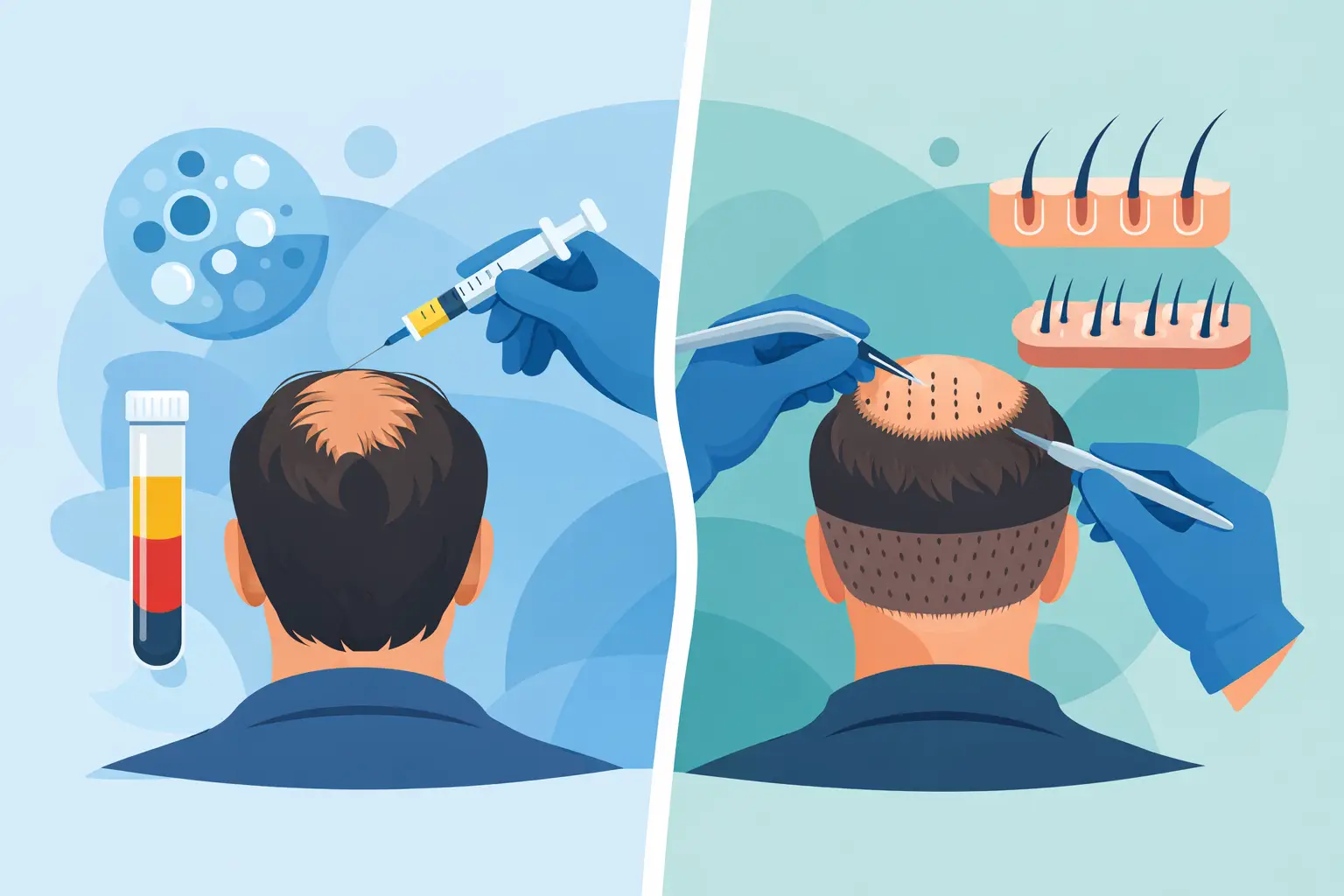
PRP and hair transplant surgery are two different approaches that may be considered for certain types of hair loss. PRP is a non-surgical treatment intended to support existing hair follicles, while hair transplant surgery relocates follicles from a donor area to areas affected by hair loss.
Which approach may be appropriate depends on factors such as the type and stage of hair loss, follicle activity, donor hair availability, medical history and individual circumstances.
Both treatments can play a valuable role in hair restoration. PRP is designed to support and strengthen existing follicles, while a hair transplant moves healthy follicles into thinning or bald areas for a more permanent change in coverage. One may be the right starting point. For some people, the strongest plan includes both.
PRP or Hair Transplant: The Core Difference
PRP stands for platelet-rich plasma. During treatment, a small sample of your blood is taken and processed to concentrate the platelets. That platelet-rich plasma is then injected into areas of thinning hair. The goal is to encourage weakened but still active hair follicles, helping them produce thicker, healthier-looking hair over time.
A hair transplant is a surgical procedure. Healthy follicles are typically taken from the back or sides of the scalp, where hair is more resistant to thinning, and carefully placed in areas with reduced density. Once those grafts settle and grow, they continue to grow as your own hair.
The key distinction is simple: PRP works with hair follicles you still have. A transplant redistributes healthy follicles to areas where they are no longer present or are too sparse to create meaningful coverage.
When PRP May Be the Better Choice
PRP hair treatment is often suited to people in the earlier stages of hair thinning. You may notice a wider part, reduced density around the crown, more scalp showing under bright light, or a receding hairline that still has fine hairs present. In these situations, the follicles may still be viable, even if they are producing thinner strands than before.
It is a nonsurgical option, which appeals to patients who want to take action without the downtime of a procedure. Appointments are relatively quick, and most people return to normal daily activity soon afterward. Some tenderness, redness, or mild swelling at the injection sites can occur, but these effects generally settle quickly.
PRP is not an instant transformation. Hair grows in cycles, and improvement takes patience. A course of treatments is commonly recommended, followed by maintenance appointments based on your response and ongoing hair-loss pattern. Results vary, but the aim is usually stronger existing hair, reduced shedding, and improved density rather than a completely new hairline.
PRP can also be a smart option for someone who is not yet ready for surgery. It gives you a chance to support your current hair and monitor how your loss progresses before committing to a transplant plan.
What PRP Cannot Do
PRP cannot create new follicles in a fully bald area. If the scalp has been smooth and bare for years, there may be too little active follicle activity for injections alone to produce visible regrowth. It also cannot always stop genetic hair loss permanently without continued maintenance.
That does not make PRP a poor choice. It simply means expectations need to be realistic. The best results are usually seen when treatment begins before thinning becomes advanced.
When a Hair Transplant Makes More Sense
A hair transplant is often the stronger option for established hair loss, a significantly receded hairline, thinning temples, or bald patches where non-surgical treatments have limited potential. It can create a more noticeable and lasting improvement in areas that have lost substantial density.
The procedure is particularly appealing if you want to restore the frame of your face. A well-designed hairline can make a major difference to your overall appearance, helping you look fresher, younger, and more confident without changing who you are.
Suitability depends on more than the size of the thinning area. Your practitioner will assess the density and quality of your donor hair, the likely progression of your hair loss, your scalp health, and the look you hope to achieve. A transplant is not about placing as many grafts as possible. It is about using a finite donor supply carefully to create a natural result that will still look good years from now.
Recovery requires more planning than PRP. You will need to protect the grafts during the early healing period and follow aftercare instructions closely. Transplanted hairs commonly shed in the first weeks, which can feel worrying but is a normal part of the growth cycle. New growth usually begins to appear after several months, with results continuing to mature over the following year.
A Transplant Is Not Always a One-Time Decision
Transplanted follicles are generally long-lasting, but your original hair can continue to thin around them. This is why a natural, age-appropriate design matters. It is also why PRP or other hair-loss management may be recommended alongside a transplant to support the native hair that remains.
For younger patients with rapidly changing hair loss, a surgeon may advise delaying surgery or taking a conservative approach. Building a very low, dense hairline too early can create problems later if hair loss progresses behind it.
Comparing Results, Recovery, and Investment
PRP and hair transplants serve different goals, so comparing them only by price can lead to the wrong decision. PRP has a lower upfront cost and little downtime, but it usually requires a series of treatments and ongoing maintenance. It is best viewed as a way to preserve and enhance what is already there.
A hair transplant requires a larger initial investment and a longer recovery timeline, but it can provide a more substantial change in areas where follicles have been lost. The final cost depends on the number of grafts needed, the size of the treatment area, and the complexity of your plan.
Neither option should be chosen based on a promotional price alone. Hair restoration is highly visible. Experience, graft handling, hairline design, safety standards, and clear aftercare all influence the quality of the result.
Can You Combine PRP and a Hair Transplant?
Yes. For many patients, combining treatments is a practical way to pursue a fuller overall result. A transplant can rebuild a hairline or add density to areas of advanced loss, while PRP may support the surrounding native hair.
This combination is especially useful when you have a distinct bald or receded area but also diffuse thinning elsewhere. The transplant addresses the area with the greatest need, and PRP is used to help protect the hair you have not lost.
The timing should be personalized. Your practitioner may recommend PRP before surgery to improve scalp and hair condition, after surgery as part of a recovery plan, or at regular intervals to maintain native hair. There is no one-size-fits-all schedule.
How to Choose the Right Hair Restoration Plan
The right treatment starts with an honest consultation, not a promise of instant density. Bring attention to how long you have noticed thinning, whether hair loss runs in your family, any medical changes or medications, and what result would make you feel more like yourself.
If you still have thinning hair across the area you want to improve, PRP may be worth considering first. If the area is largely bald, the hairline has moved back significantly, or you want a major increase in coverage, a transplant may be the more effective route. If your hair loss includes both active thinning and bald areas, a combined plan could offer the best balance.
A good provider will be direct about what is achievable, protect your long-term donor supply, and create a treatment plan that fits your appearance goals rather than pushing a single procedure. The best time to ask about PRP or a hair transplant is when you first notice the change – because earlier action can leave you with more options and more confidence in the mirror.
0 Comments