
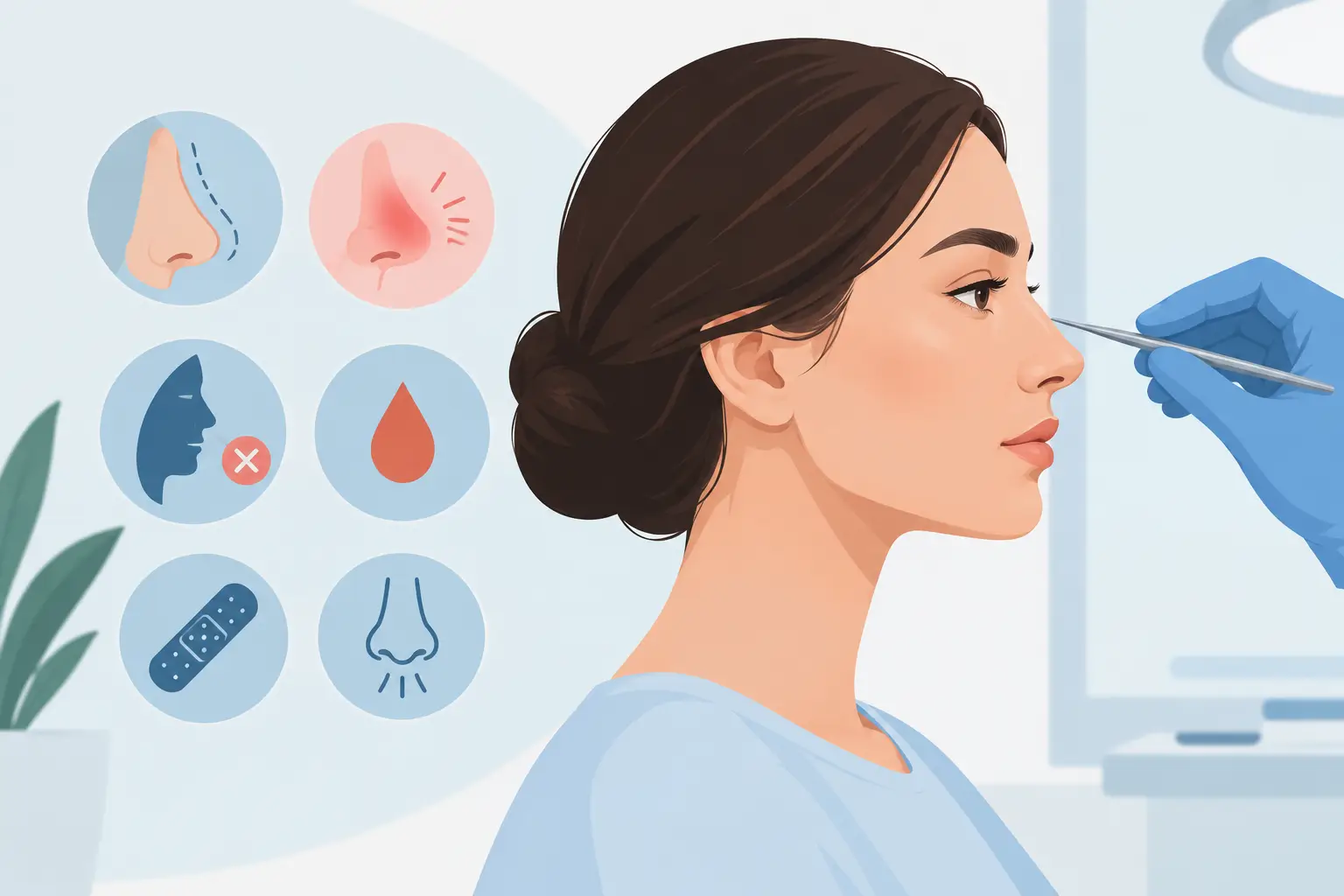
A nose job can refine a profile, improve facial balance, or make breathing easier. But the best-looking result starts with an honest conversation about rhinoplasty risks – not just before-and-after photos. Rhinoplasty is a highly individualized procedure, and understanding the possible complications, recovery demands, and limits of surgery helps you make a decision that feels confident rather than rushed.
For many people, the aim is not a completely different face. It is a nose that suits their features, photographs well from different angles, and feels natural. Reaching that goal requires careful planning, realistic expectations, and an experienced surgical team.
What Are the Main Rhinoplasty Risks?
Every surgical procedure carries some level of risk. Most rhinoplasty patients recover without serious complications, particularly when they are healthy, follow pre-operative guidance, and choose a properly qualified surgeon. Still, it is essential to understand what can happen.
Common short-term effects include swelling, bruising around the eyes, tenderness, congestion, temporary numbness, and mild bleeding. These are generally expected parts of the recovery process rather than signs that something has gone wrong. Swelling can take months to settle fully, especially at the tip of the nose, so the final shape is not visible immediately.
Less common but more significant rhinoplasty risks include infection, a reaction to anesthesia, excessive bleeding, delayed wound healing, and visible scarring. Incisions placed inside the nostrils leave no external scar. With an open rhinoplasty approach, a small incision is made across the strip of skin between the nostrils. This usually heals discreetly, though every person heals differently.
There is also a risk of asymmetry or an outcome that does not match the patient’s expectations. Human faces are naturally asymmetrical, and nasal cartilage, skin thickness, prior injury, and healing response can all affect the final result. A surgeon can improve proportion and balance, but cannot promise mathematical symmetry or replicate an edited image exactly.
Breathing Changes and Structural Concerns
Aesthetic improvement should never come at the expense of nasal function. The nose is a complex structure of bone, cartilage, skin, and internal airways. Removing too much cartilage or narrowing the nose beyond what its structure can support may affect breathing.
Possible functional complications include nasal blockage, collapse of the nasal valve, persistent congestion, or a feeling that airflow has changed. These concerns are especially relevant for people who already struggle with a deviated septum, allergies, previous nasal trauma, or difficulty breathing through one side of the nose.
This is why your consultation should cover function as well as appearance. Tell your surgeon if you snore, have suffered a broken nose, experience regular sinus issues, or rely on nasal sprays. In some cases, combining cosmetic rhinoplasty with septal correction can help address both shape and airflow. In other cases, a more conservative cosmetic plan may be the safer choice.
Revision Surgery Is Possible, But It Is Not Simple
One of the most discussed rhinoplasty risks is the need for revision surgery. A small number of patients seek a second procedure because of healing changes, breathing concerns, persistent asymmetry, or dissatisfaction with the first result.
Revision rhinoplasty is generally more complex than a first procedure. Scar tissue can make the operation technically demanding, and there may be less cartilage available to reshape the nose. Surgeons sometimes need cartilage grafts from the ear or rib to rebuild support. For this reason, choosing your surgeon carefully the first time matters greatly.
A revision should not be considered too early. Because nasal tissues settle gradually, surgeons often recommend waiting around a year after primary rhinoplasty before judging the final outcome or planning further surgery, unless there is an urgent functional issue.
Who May Face a Higher Risk?
Your individual risk profile matters as much as the procedure itself. Smoking and nicotine use can reduce blood flow and interfere with healing. This includes cigarettes, vaping, nicotine pouches, and some nicotine replacement products. Patients are usually asked to stop nicotine well before and after surgery according to their surgical team’s guidance.
Certain medical conditions can also increase risk. These include uncontrolled diabetes, bleeding disorders, immune system conditions, severe allergies, and health issues that affect anesthesia safety. Some supplements and medications can raise the chance of bleeding, including blood thinners, anti-inflammatory medicines, and certain herbal products. Never stop prescribed medication on your own, but make sure your clinician has a complete and accurate list of everything you take.
Previous nasal surgery or a history of trauma can make the procedure more complicated. Thick skin, weak cartilage, and significant asymmetry do not make someone unsuitable for surgery, but they may affect what can realistically be achieved. The right plan is built around your anatomy, not a one-size-fits-all nose shape.
How to Reduce Rhinoplasty Risks
You cannot remove every risk from surgery, but you can make safer, more informed choices. Start by selecting an appropriately licensed, experienced surgeon who performs rhinoplasty regularly and is prepared to discuss both cosmetic and breathing outcomes.
During your consultation, ask how your anatomy affects the surgical plan, whether an open or closed technique is recommended, and what changes are realistic for your skin type and nasal structure. Look for clear answers rather than broad promises. A trustworthy surgeon should be comfortable explaining limitations, recovery timelines, and the possibility of revision.
You should also share your complete health history, even if it feels unrelated to your nose. Previous surgeries, medications, allergies, recreational drug use, smoking, and mental health history can all be relevant to safe treatment planning.
Preparation also affects recovery. Arrange time away from work or social commitments, organize help for the first day or two if needed, and set up a comfortable place to rest with your head elevated. Follow pre-operative instructions precisely, including guidance around food, drink, medication, alcohol, and nicotine.
Recovery: What Is Normal and What Needs Attention?
Most patients can expect the first week to be the most visible stage of recovery. You may have a cast or splint, swelling, bruising, and blocked-nose sensations. You will need to avoid strenuous exercise, heavy lifting, bending forward, and anything that could knock or put pressure on the nose.
After the first week or two, many people feel comfortable returning to desk-based work and everyday errands. However, the nose remains vulnerable for longer than it looks. Contact sports, intense workouts, swimming, and wearing glasses directly on the bridge may need to be paused for a period recommended by your surgeon.
Contact your surgical team promptly if you develop worsening pain rather than gradual improvement, a fever, spreading redness, foul-smelling discharge, significant bleeding, sudden swelling, changes in vision, shortness of breath, or a severe reaction to medication. Trust your instincts. It is always better to ask a question early than to wait and worry.
Expectations Matter as Much as Technique
The emotional side of rhinoplasty deserves just as much attention as the physical side. Your appearance may change slowly as swelling settles, and it is normal to have moments of uncertainty during recovery. A nose can look uneven or larger than expected in the early weeks because healing is not perfectly linear.
Bring reference images to your consultation if they help communicate your taste, but use them as a starting point rather than a guarantee. Your surgeon should assess whether the look you want suits your facial proportions and can be achieved safely. The most successful results tend to look refined, balanced, and authentically yours.
If you are considering rhinoplasty because of intense pressure from someone else, a major life crisis, or the hope that surgery will solve broader confidence or relationship concerns, give yourself more time. Cosmetic surgery can enhance features you already want to improve, but it cannot create perfection or fix every source of insecurity.
A thoughtful consultation gives you space to ask direct questions, understand the trade-offs, and decide whether the timing feels right. The goal is not simply a smaller or straighter nose – it is a result that supports your confidence while protecting your health, breathing, and long-term comfort.
0 Comments