
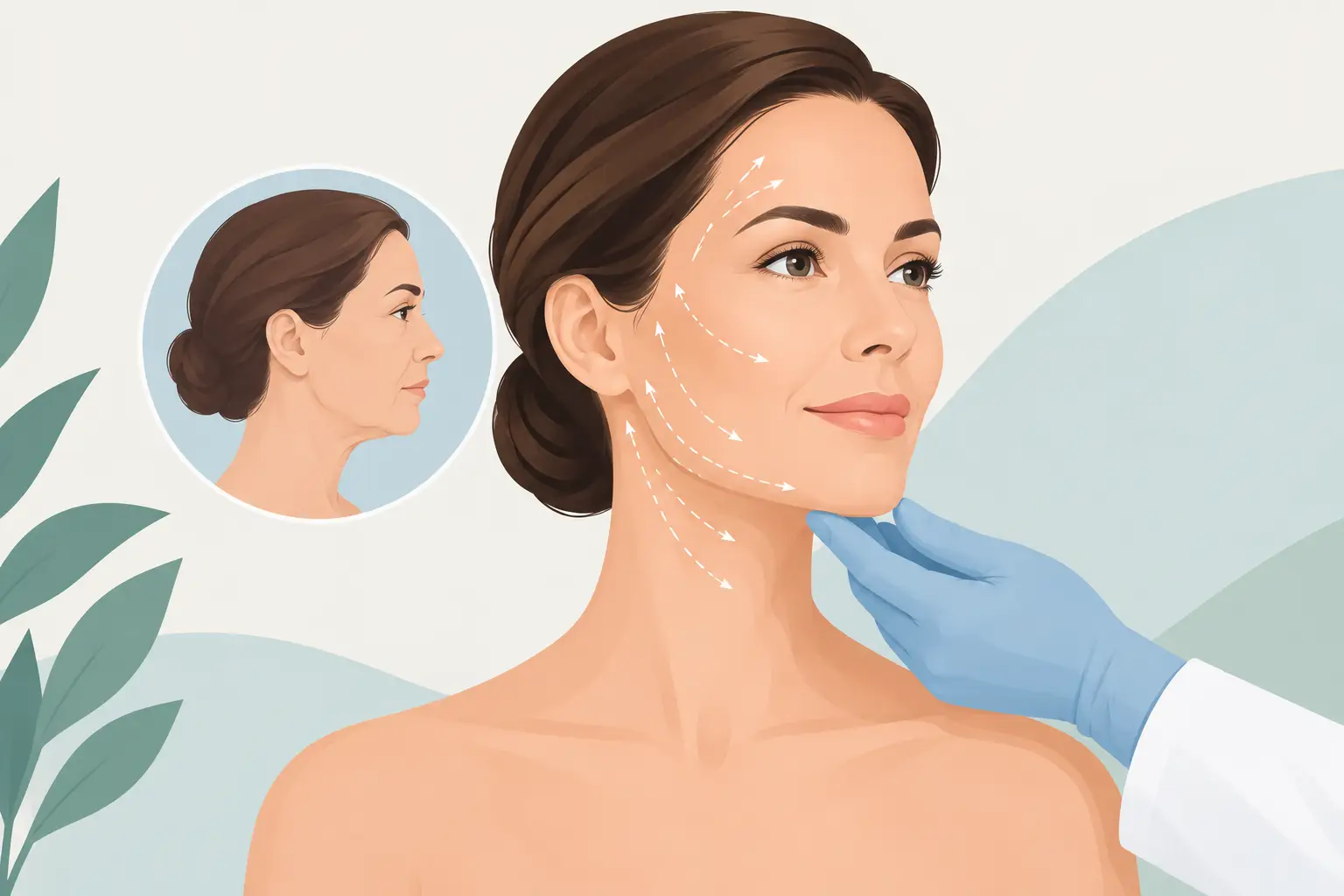
A facelift is not about looking like someone else. Done well, it can help your face reflect the energy and confidence you still feel, with a smoother jawline, firmer cheeks, and less loose skin around the lower face and neck. This facelift procedure guide explains what treatment can realistically achieve, what recovery involves, and how to make a decision you feel good about.
For many people, the moment comes when skincare, injectables, and good lighting no longer make the difference they once did. A surgical facelift is a bigger commitment, but it can offer a more substantial and longer-lasting improvement for sagging facial tissue.
What a Facelift Can Improve
A facelift, also called a rhytidectomy, is designed to lift and reposition facial tissues that have descended with age. It primarily treats the lower two-thirds of the face, including jowls, deep folds from the nose to the mouth, loss of definition at the jawline, and loose skin around the cheeks.
Modern techniques are not simply about pulling the skin tighter. Your surgeon works with the deeper supportive layer beneath the skin, often called the SMAS, to restore a more natural facial contour. The skin is then redraped with care so the result looks refreshed rather than stretched.
A facelift may also be combined with a neck lift when loose neck skin, vertical neck bands, or fullness under the chin are part of the concern. Some patients choose eyelid surgery, facial fat transfer, or skin treatments at the same time, depending on their goals. Combining procedures can be convenient, but it also means a longer operation and a more involved recovery. The right approach depends on your anatomy, health, and how much change you want.
Facelift Procedure Guide: Are You a Good Candidate?
The best candidates are usually healthy adults with noticeable laxity in the face or neck and realistic expectations about surgery. There is no single “right” age. Some people seek a facelift in their 40s because facial changes are affecting confidence; others wait until their 60s or later. Skin quality, bone structure, and the degree of tissue descent matter more than a number on a birthday card.
A good consultation should focus on what you see when you look in the mirror, not on selling a one-size-fits-all procedure. You may be suited to a full facelift, a limited-incision approach, a neck lift, or a non-surgical plan instead. If your main concern is fine lines, surface texture, or volume loss in the upper face, a facelift alone may not be the answer.
Smoking and nicotine use can significantly affect healing and increase the risk of skin complications. Your surgeon may require you to stop using all nicotine products before and after surgery. Certain medications, medical conditions, blood-thinning supplements, and previous facial surgery can also influence whether treatment is appropriate and how it should be planned.
What Happens Before Surgery
Your consultation is the time to be open about your goals. Bring up the areas that bother you most, whether that is a soft jawline in photographs, heavy cheeks, jowls, or loose skin at the neck. Your surgeon will examine your skin elasticity, facial structure, and neck anatomy, then discuss an approach that matches your features.
You should also discuss incision placement, anesthesia, downtime, likely scarring, costs, and what happens if healing takes longer than expected. Looking at before-and-after results can be useful, but focus on patients with a similar age, facial shape, and starting point. A natural-looking result should still look like you.
Before surgery, you may be asked to complete medical testing, adjust medications, avoid certain supplements, and arrange help at home. Plan for a quiet recovery period rather than trying to fit surgery between a busy work schedule and social events. Giving yourself enough time is one of the best ways to protect both your comfort and your confidence.
What Happens During a Facelift Procedure?
Facelift surgery is commonly performed under general anesthesia or sedation with local anesthesia, depending on the procedure and your surgeon’s recommendation. Incisions are usually placed around the ear and within the hairline, where they can be concealed as discreetly as possible. If a neck lift is included, a small incision beneath the chin may also be needed.
Your surgeon carefully lifts and repositions deeper tissues, removes or redistributes excess fat where appropriate, and trims loose skin. The incisions are then closed with sutures or staples. Small drains may be used briefly to reduce fluid buildup, although not every patient needs them.
Surgery time varies. A straightforward facelift may take several hours, while combined facial procedures take longer. You will need someone to take you home and stay with you initially, as anesthesia and early swelling can make you feel tired and unsteady.
Recovery: The Part You Should Plan For
The first week is usually the most visible stage of recovery. Swelling, bruising, tightness, and mild discomfort are expected. Prescription or over-the-counter pain relief may be recommended by your surgical team, along with instructions on caring for dressings and keeping your head elevated.
Most patients feel ready for light activity within a few days, but strenuous exercise, heavy lifting, bending, and anything that raises blood pressure should be avoided for the period advised by the surgeon. This is not the time to test your limits. Rushing back to the gym or a demanding routine can increase swelling and interfere with healing.
Many people allow two to three weeks before returning to public-facing work or events, though bruising and swelling vary widely. Makeup may help conceal residual discoloration once your surgeon confirms it is safe to use. Final refinement takes longer. It can take several months for swelling to fully settle and scars to mature.
Follow-up appointments matter. They allow your surgical team to monitor healing, remove sutures if needed, and address concerns early. Contact the clinic promptly if you have increasing pain, sudden swelling on one side, fever, unusual drainage, or any change that feels concerning.
Scars, Risks, and Realistic Expectations
Every surgical facelift leaves scars. The goal is not to promise scar-free surgery, but to place incisions carefully and support good healing. Early scars can look pink or firm, then gradually soften and fade. Your individual healing tendency, skin type, sun exposure, and aftercare all play a role.
As with any elective surgery, a facelift carries risks. These can include bleeding, infection, fluid collection, delayed wound healing, numbness, asymmetry, hairline changes, nerve injury, and unfavorable scarring. Serious complications are uncommon, but they should be discussed honestly before you commit. Choosing a qualified, experienced surgeon and following pre- and post-operative instructions can help reduce risk, though no procedure is risk-free.
A facelift can turn back visible signs of aging, but it does not stop aging altogether. Weight changes, smoking, sun damage, and genetics will continue to affect the face over time. Many patients enjoy results for years, especially when they maintain a stable weight, use sun protection, and take care of their skin.
Choosing the Right Treatment Plan
The most attractive results are usually the least obvious. Friends may say you look rested, healthier, or somehow more like yourself, without immediately identifying why. That requires a plan built around your face, not a trend or a copied celebrity result.
At Essex Boys Medical Group, the focus is on giving patients clear information and direct access to experienced practitioners across facial and aesthetic treatments. A private consultation gives you space to ask practical questions, understand the likely outcome, and decide whether a facelift is the right next move for your confidence.
If you are considering surgery, start with an honest conversation about the change you want to see and the recovery you can realistically accommodate. The right facelift plan should leave you looking refreshed enough to smile at your reflection, while still feeling completely like yourself.
0 Comments