
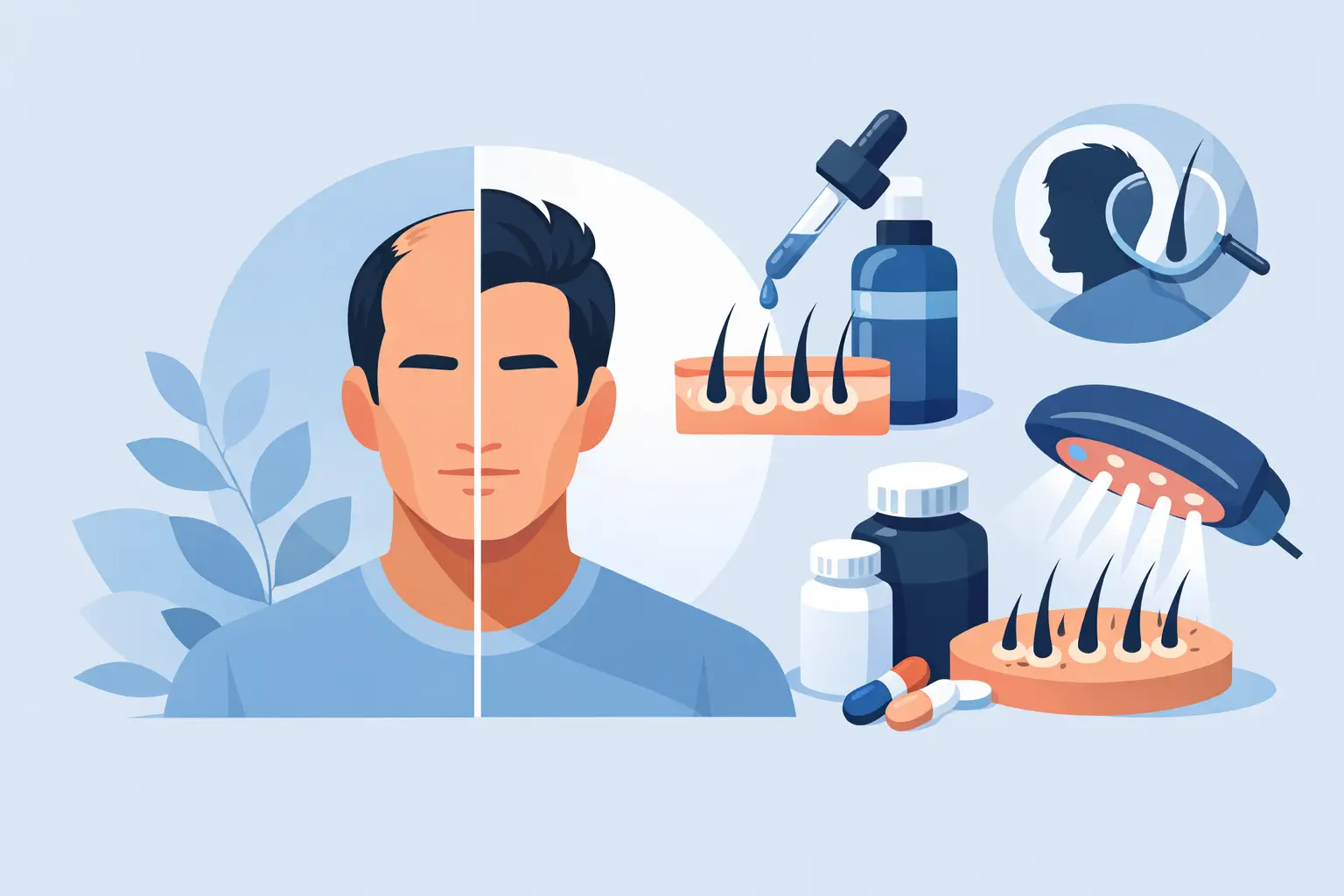
Male hair loss can have several causes, and the most appropriate treatment depends on the type and stage of hair loss, medical history and individual circumstances.
Options may include topical or prescription medication, PRP and hair transplant surgery. An appropriate assessment can help identify the possible cause of hair loss and determine which approaches may be suitable.
What Causes Male Hair Loss?
For many men, hair loss is caused by androgenetic alopecia, often called male pattern baldness. Genetics make certain follicles sensitive to DHT, a hormone derived from testosterone. Over time, affected follicles become smaller, the growth phase shortens, and the hair that grows back becomes finer until it may no longer be visible.
This pattern often begins at the temples, hairline, or crown. It can be gradual, which makes it easy to ignore at first. Yet early action usually gives you more options because treatments can preserve existing follicles before they become inactive.
Not every case is genetic. Stress, rapid weight loss, illness, medication, nutritional deficiencies, inflammatory scalp conditions, and thyroid changes can also cause shedding. A professional assessment matters, especially if loss is sudden, patchy, or paired with itching, pain, scaling, or fatigue. Treating the wrong cause is a waste of time and money.
Male Hair Loss Treatment Options to Consider
There is no single treatment that suits every man. Some want a simple at-home routine to hold onto their current hair. Others want more noticeable density or a permanent restoration of the hairline. A personalized plan can combine medical support with regenerative treatment or surgery, depending on your goals.
Topical Minoxidil
Minoxidil is a topical treatment applied directly to the scalp, usually once or twice daily depending on the product and medical advice. It is designed to support the hair growth cycle and can help some men maintain hair or see improved thickness in areas where follicles are still active.
Consistency is the trade-off. If you stop using it, any gains may gradually be lost. Some people experience temporary shedding during the early stages as hairs cycle through, and scalp irritation can occur. It is often most useful for men with early thinning around the crown or diffuse thinning, rather than completely smooth bald areas.
Prescription DHT-Blocking Medication
Prescription medications such as finasteride can lower DHT levels and are commonly considered for male pattern hair loss. For suitable candidates, this can slow progression and help protect hair that is at risk of miniaturizing.
This option requires an informed conversation with a qualified prescriber. Potential side effects can include changes in libido, sexual function, mood, and breast tenderness, although experiences vary from person to person. Your medical history, current medications, family-planning considerations, and comfort with ongoing treatment should all be discussed before starting.
PRP Hair Restoration
Platelet-rich plasma, or PRP, uses a concentrated portion of your own blood that contains platelets and growth factors. After a blood draw, the sample is processed and the PRP is injected into targeted areas of the scalp. The aim is to support follicle activity and improve the quality, strength, and density of existing hair.
PRP can be an appealing choice for men who want a non-surgical treatment with minimal downtime. It may be particularly useful when hair is thinning but the follicles are still present. Most treatment plans involve an initial course of sessions followed by maintenance appointments. Results are gradual, and PRP does not create new follicles in areas that have been bald for many years.
PRP is often used alongside medically appropriate hair-loss medication or topical treatment. That combination can make sense when the goal is both to protect vulnerable hair and improve the look of thinning areas.
Hair Transplant Surgery
A hair transplant is the most direct option for restoring hair where follicles have been permanently lost. Healthy follicles are moved from a donor area, typically at the back and sides of the scalp, to thinning or bald areas such as the hairline, temples, or crown.
Modern transplant planning is about more than placing grafts. The hairline needs to look natural at close range, suit your age, and leave enough donor supply for the future. A strong result considers the direction of growth, the density needed in different zones, facial proportions, and the likely progression of your natural hair loss.
Transplanted hair is designed to grow long term because it retains characteristics of the donor area. However, surrounding native hair can continue to thin. For that reason, many suitable patients use PRP, medication, or topical treatment to support the non-transplanted hair around the restored area.
Surgery involves downtime, aftercare, and patience. The grafted area goes through a normal healing phase, and transplanted hairs commonly shed before new growth begins. Visible growth often starts after several months, with the most developed result taking up to a year or longer. It is a commitment, but for the right candidate, it can be a powerful confidence-building solution.
How to Choose the Right Approach
The most practical starting point is to be honest about your goal. If you have noticed early thinning and want to maintain what you have, non-surgical treatment may be enough. If your hairline has moved back significantly or you have established bald areas, a transplant may offer the most visible change.
Age and the stability of your hair loss also matter. A very aggressive hairline design may look appealing now but can become difficult to maintain if surrounding hair continues to recede. A careful consultation should look beyond the immediate result and create a plan that still looks natural years from now.
Your lifestyle is relevant too. Daily medication or topical use requires consistency. PRP requires scheduled maintenance. A transplant requires recovery time and a realistic understanding that results develop gradually. The best plan is not always the most intensive one. It is the option you are comfortable following through with.
What Results Can You Realistically Expect?
Hair restoration is not instant, and trustworthy treatment providers should never promise a full head of hair for every patient. Medication and PRP may help reduce shedding, improve thickness, and make styling easier, but results vary with genetics, the extent of follicle miniaturization, and consistency of treatment.
A hair transplant can make a dramatic difference to the hairline and overall framing of the face, but available donor hair sets the limit. The goal is typically natural-looking coverage and improved density, not unrealistic density across every square inch of the scalp.
Progress photographs taken in consistent lighting are useful because hair changes slowly. You may not notice small improvements week to week, while a series of photographs can show whether your plan is delivering a meaningful change over several months.
Avoid Quick Fixes That Ignore the Cause
Thickening shampoos, styling fibers, and volumizing products can help hair look fuller for an event or daily styling. They can be useful confidence tools, but they do not stop genetic hair loss or replace a treatment plan. Be equally cautious with unregulated supplements and clinics that guarantee results without reviewing your medical history or examining your scalp.
A credible provider will explain what a treatment can achieve, what it cannot achieve, the risks involved, expected recovery, and the likely need for maintenance. That clarity protects you from spending on a solution that does not match your stage of hair loss.
Take the First Step With a Personal Consultation
Hair loss can feel personal, but it is also treatable in many cases. Whether you are seeing early thinning, a widening crown, or a receding hairline that no longer feels like you, a consultation can turn uncertainty into a clear plan. The most helpful next step is to have your scalp, donor area, goals, and treatment suitability assessed so you can choose a route that helps you look more like yourself and feel confident showing it.
0 Comments