
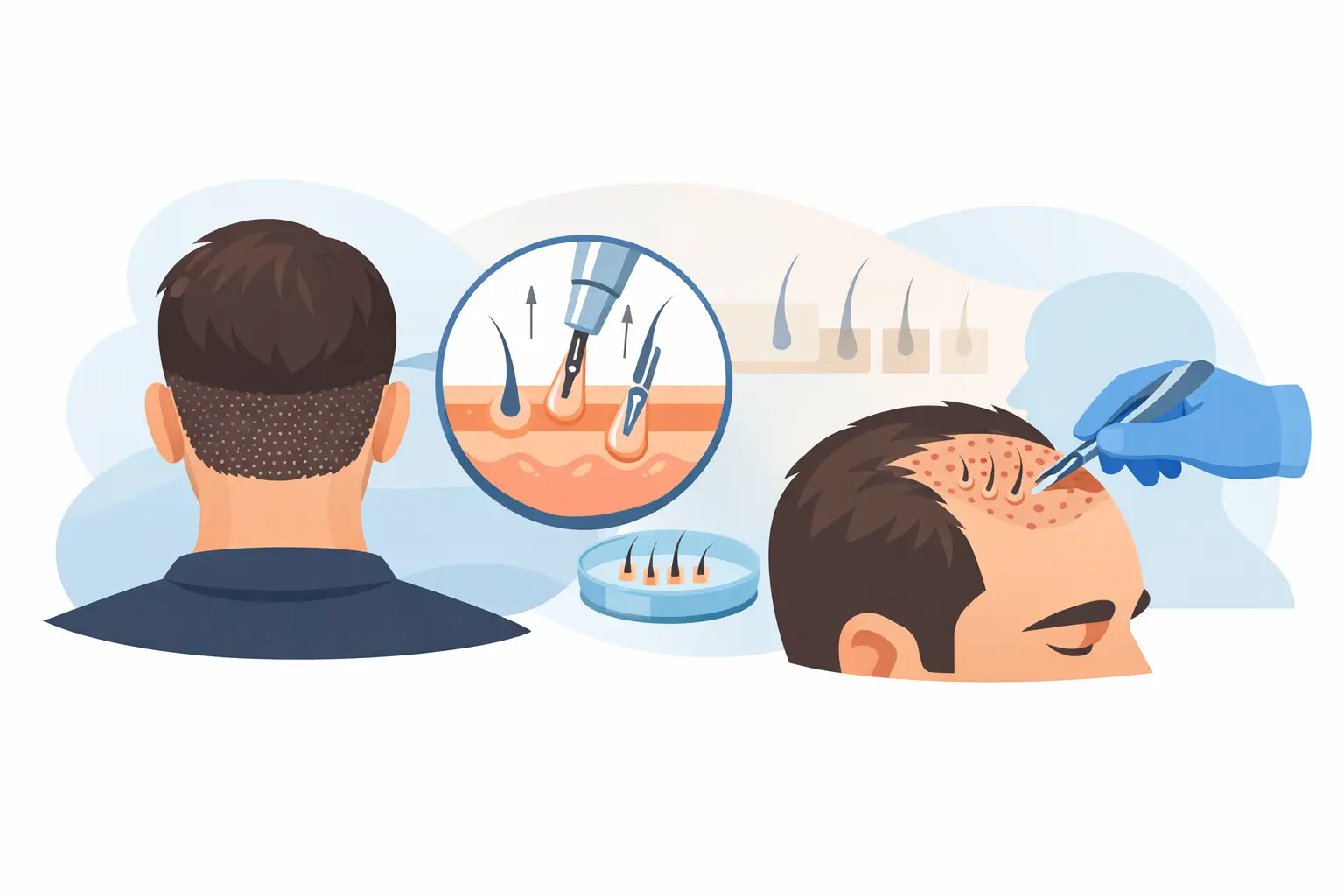
A hair transplant is a surgical procedure that moves hair follicles from a donor area, usually the back or sides of the scalp, to areas affected by hair loss. The procedure requires careful assessment and planning, with factors such as the pattern of hair loss, donor hair availability, hair characteristics and medical history all influencing the treatment plan.
A quality transplant is personal. Your hairline design, donor supply, pattern of loss, hair texture, and future hair-loss risk all shape the treatment plan. That is why the process begins well before the day of surgery.
What Is the Procedure of a Hair Transplant?
A hair transplant generally follows four stages: consultation and planning, preparation of the donor area, collection of grafts, and placement of those grafts into thinning or bald areas. The procedure is usually performed under local anesthesia, meaning you remain awake but the scalp is numbed for comfort.
The transplanted follicles retain many of the characteristics of the donor area. Once they settle and grow, they can be cut, washed, and styled like the rest of your hair. Results take time, however. A hair transplant is a long-term investment in your appearance, not an overnight change.
Your Consultation and Hairline Plan
The consultation is where a safe, believable result starts. A practitioner assesses the type and extent of your hair loss, the density and quality of your donor hair, your scalp health, and your medical history. They should also discuss medications, previous treatments, and whether your hair loss is stable or still progressing quickly.
Hairline design deserves particular attention. A low, dense hairline may sound appealing, but it can look unnatural over time and use too many donor grafts. A well-designed hairline should complement your facial proportions while preserving donor hair for the future. For some patients, the best result is a subtle restoration that adds strength around the temples and frontal hairline rather than trying to recreate teenage density.
You will also discuss the number of grafts likely needed. A graft is a small naturally occurring group of one to four hairs. More grafts are not automatically better. The right number depends on the area being treated, the available donor supply, and the level of coverage you want to achieve.
Choosing the Right Transplant Method
The two main surgical techniques are follicular unit extraction, commonly called FUE, and follicular unit transplantation, often called FUT or strip surgery. Both can produce excellent results in suitable hands, but they leave different types of scars and have different recovery considerations.
FUE Hair Transplant
With FUE, individual follicular units are removed one by one from the donor area using a tiny punch tool. This leaves small dot-like scars that are usually difficult to see once the surrounding hair grows back. FUE is a popular choice for people who prefer shorter hairstyles or want to avoid a linear scar.
The donor area is generally trimmed short so the practitioner can accurately collect the follicles. Because each graft is extracted individually, FUE can take several hours and sometimes requires more than one session for larger areas of hair loss.
FUT or Strip Hair Transplant
With FUT, a narrow strip of scalp is removed from the donor area. The strip is then carefully divided under magnification into individual follicular grafts. The donor area is closed with sutures or staples, leaving a fine linear scar that is typically concealed by longer hair.
FUT may be considered when a larger number of grafts is needed in one session or when preserving the surrounding donor hair is a priority. It does involve a different healing experience, and it may be less suitable for patients who regularly wear their hair very short.
The best technique depends on your needs, not on a one-size-fits-all sales pitch. An honest consultation should explain why a particular method is recommended, what scarring to expect, and what level of density is realistically achievable.
What Happens on the Day of Surgery?
On the day of treatment, the team reviews the planned hairline and treatment area before any grafts are taken. The scalp is cleaned, photographs may be taken for records, and local anesthesia is administered to the donor and recipient areas. You may feel brief pressure or a small sting during numbing, but the procedure itself should be comfortable.
The next step is harvesting. In an FUE procedure, the practitioner removes follicular units individually. In FUT, the donor strip is removed and the grafts are prepared by a trained team. Each graft is handled with care to protect the follicles and maintain the best possible chance of growth.
Once the grafts are ready, tiny recipient sites are created in the thinning area. This is one of the most artistic and technical stages of a hair transplant. The angle, direction, and placement of every site influence how the new hair will lie when it grows. Fine single-hair grafts are often used at the front hairline for softness, while grafts containing more hairs may be placed behind them to build coverage and density.
Finally, the grafts are placed into the recipient sites. Depending on the number of grafts, the full appointment can take much of the day. You can usually go home afterward with clear aftercare instructions and a plan for follow-up.
Recovery: What to Expect After a Hair Transplant
Mild swelling, redness, tenderness, and small scabs are normal during the first days after treatment. The recipient area needs gentle care while grafts establish themselves. You will be advised on how to sleep, when to wash your hair, when to return to exercise, and how to protect your scalp from friction and direct sun exposure.
For the first week or two, avoiding scratching, picking, heavy workouts, swimming, and anything that could disturb the grafts is essential. Most people can return to desk-based work fairly quickly, although visible redness and scabbing may influence when you feel ready to be seen socially.
A common concern is shedding. Transplanted hairs often fall out within several weeks of the procedure, a normal phase sometimes called shock shedding. The follicles remain beneath the skin, and new growth usually begins gradually after a few months. Early hairs can look fine or uneven at first, then become stronger over time.
Many patients begin noticing meaningful improvement around four to six months. Results continue developing for 12 months or longer, especially in crown areas, where growth can take more time to mature. Patience is part of the process, but the eventual change can be striking: a more defined hairline, improved coverage, and the confidence to style your hair without constantly trying to hide thinning areas.
Is a Hair Transplant Right for You?
Hair transplantation can work well for men and women with pattern hair loss and a healthy donor area. It may also be used to improve certain scars or restore hair in specific areas. However, it is not right for every type of hair loss. Active inflammatory scalp conditions, some forms of diffuse shedding, limited donor density, and rapidly progressing loss may require a different approach first.
Medical treatments and regenerative options such as PRP may be recommended alongside or before surgery in some cases. These treatments do not replace transplanted follicles, but they may help support existing hair depending on your individual situation. A responsible provider will be clear about what treatment can and cannot deliver.
At Essex Boys Medical Group, the focus is on creating a treatment plan that fits your appearance goals while respecting the long-term health of your donor hair. The right result should look like it belongs to you, not like a procedure that was done to you.
If hair loss is making you hold back, the most useful next step is a personal assessment. A thoughtful consultation can give you a clear picture of your options, your likely result, and the practical route toward feeling more confident when you look in the mirror.
0 Comments