
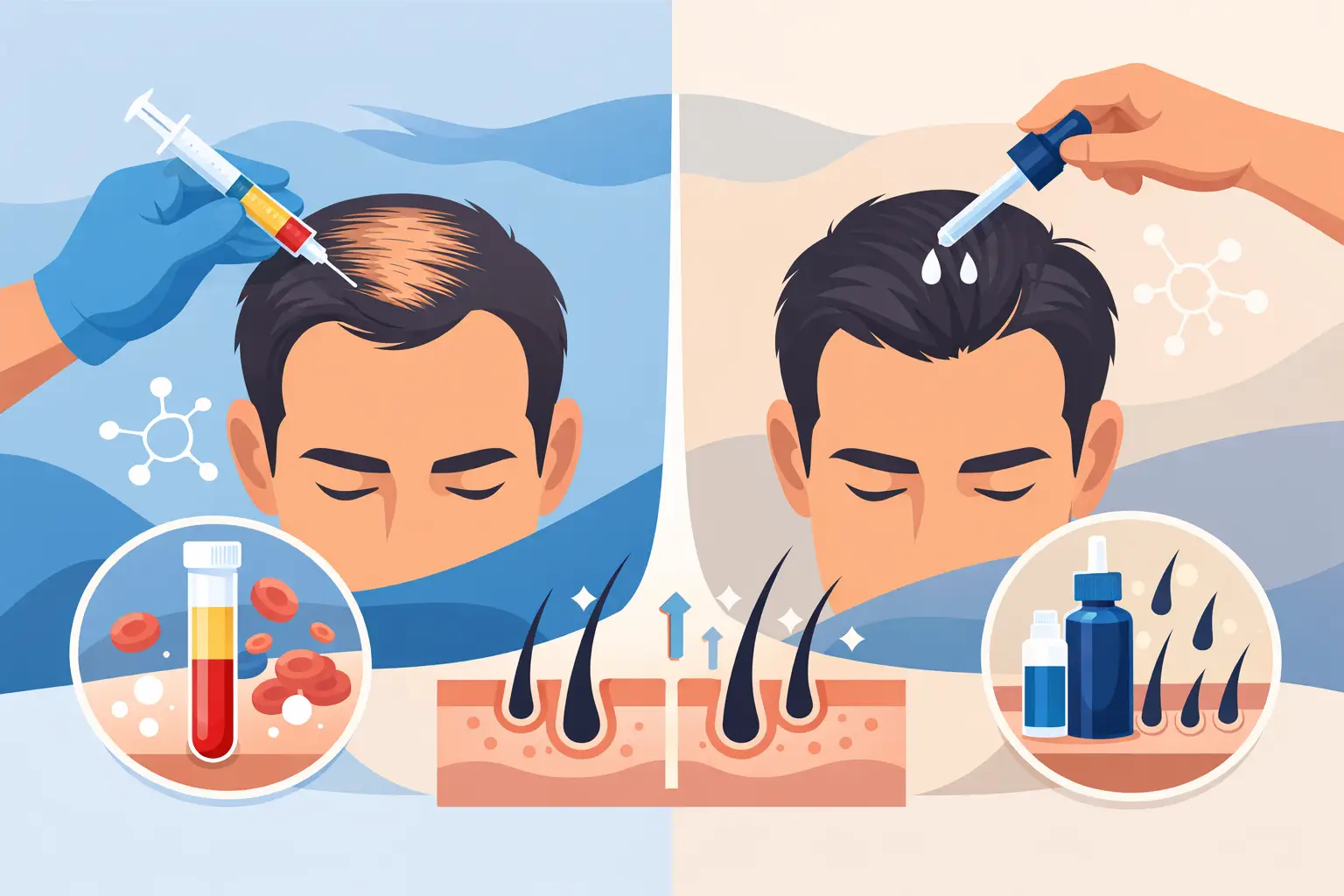
Hair thinning rarely feels like a small change when you see it in the mirror every morning. A widening part, more scalp at the hairline, or a thinner crown can affect how you style your hair, how photographs feel, and how confidently you present yourself. The choice between PRP versus minoxidil treatment often comes down to one question: do you want a convenient daily treatment, an in-clinic regenerative approach, or a carefully planned combination of both?
Both options can be valuable for suitable patients, but they work differently, require different levels of commitment, and are not the right answer for every type or stage of hair loss. A personal assessment matters because the best plan should reflect your pattern of thinning, medical history, expectations, and the result you want to maintain.
PRP versus minoxidil treatment: the key difference
Minoxidil is a medication applied to the scalp, most commonly as a foam or liquid. It is designed to support the hair growth cycle and may help follicles remain in their active growth phase for longer. It is widely used for hereditary pattern hair loss in men and women and is usually part of a long-term at-home routine.
PRP, short for platelet-rich plasma, is an in-clinic treatment created from a small sample of your own blood. The blood is processed to concentrate platelets and growth factors, then the prepared plasma is injected into areas of thinning scalp. The aim is to create a more supportive environment around weakened follicles and encourage stronger-looking growth.
The practical difference is simple. Minoxidil asks for regular, ongoing self-application. PRP involves a course of appointments followed by maintenance treatments when appropriate. Neither is an overnight solution, and neither can reliably restore follicles that have been inactive for many years.
What results can you reasonably expect?
For many people with early to moderate thinning, minoxidil can reduce shedding and improve the appearance of density over time. It tends to work best when used consistently. Missing applications frequently or stopping treatment can allow the benefits to fade, because the medication is no longer supporting the growth cycle.
PRP may suit people who want a clinically delivered treatment using their own blood products, especially when hair appears finer, weaker, or less dense but follicles are still present. Patients often choose PRP because it fits neatly into a broader appearance-focused plan and does not require daily scalp application. Results vary, however, because factors such as genetics, hormone sensitivity, nutritional status, stress, and the extent of hair loss all play a role.
With either treatment, realistic expectations are essential. The most satisfying outcomes are often gradual: reduced visible shedding, improved hair caliber, better coverage through the crown or part line, and hair that looks healthier when styled. A dramatic new hairline is unlikely with PRP or minoxidil alone if the area is already smooth and bare. In that situation, a hair transplant consultation may be more relevant.
The timeline for visible change
Hair grows slowly, which means patience is part of the treatment plan. With minoxidil, some users notice an initial period of increased shedding before improvement. This can be unsettling, but it may reflect older hairs moving through the cycle before new growth develops. Do not assume every increase in shedding is normal, though. Speak with a clinician if it is severe, prolonged, or accompanied by scalp irritation.
Most people need several months of consistent minoxidil use before they can fairly judge progress. PRP also requires time. A course commonly involves several sessions spaced over a period of months, with follow-up treatment based on your response and your provider’s recommendation. Photographs taken in the same lighting and angle can be far more useful than checking the mirror every day.
Convenience, cost, and commitment
Minoxidil is generally the more accessible starting point from a cost perspective. It can be purchased for home use, but the lower initial cost comes with a daily commitment. Some people find foam easier to use and less messy than liquid, while others dislike the residue, scalp feel, or need to plan around washing and styling their hair.
PRP involves a greater upfront investment because it is performed in a medical setting by trained practitioners. In return, it offers an appointment-based approach that may appeal to patients who prefer professional delivery and do not want to rely solely on a daily topical routine. Maintenance is still usually required, so PRP should be viewed as an ongoing hair preservation strategy rather than a one-time fix.
The right choice is not always the cheapest treatment or the most intensive one. It is the plan you can follow consistently. A product that sits unused in a bathroom cabinet will not compete with a treatment schedule you can realistically maintain.
Side effects and safety considerations
Topical minoxidil can cause dryness, flaking, itching, redness, or unwanted hair growth on the face if the product transfers beyond the scalp. Some people are sensitive to ingredients in certain formulations rather than minoxidil itself. Using more than directed will not speed up results and can increase the chance of side effects.
Oral minoxidil is sometimes prescribed for hair loss, but this is a separate conversation. It may not be suitable for everyone and should only be considered under proper medical supervision because it can affect blood pressure and may cause other systemic side effects.
Because PRP uses your own blood, the risk of allergic reaction to the injected plasma itself is low. Still, it is an injection procedure. Temporary tenderness, redness, pinpoint bleeding, swelling, or mild bruising can occur. Choosing an experienced medical provider, following aftercare guidance, and disclosing medications and health conditions are all important.
PRP may need to be postponed or reconsidered for people with certain blood disorders, active infections, platelet problems, or medical conditions that affect healing. A credible consultation should cover these details rather than treating PRP as suitable for everyone.
When a combination approach makes sense
PRP and minoxidil are not necessarily competing treatments. For the right patient, they can complement each other. Minoxidil may provide steady at-home support for the growth cycle, while PRP offers periodic in-clinic stimulation for thinning areas. This combination is often considered when someone wants to protect existing hair as actively as possible without moving straight to surgery.
A combined plan is not automatically better. If you know daily minoxidil will not fit your routine, it may be wiser to focus on an appointment-based PRP plan you will keep. Likewise, if you are in the earliest stage of thinning and want a straightforward first step, minoxidil may be a sensible place to begin.
Your diagnosis also matters. Pattern hair loss is different from sudden shedding after illness, traction-related loss from tight hairstyles, scalp inflammation, or patchy autoimmune hair loss. Treating the wrong cause can waste time when early action is especially valuable.
Who should consider PRP?
PRP may be worth considering if you have early or moderate thinning, notice reduced density rather than completely bald areas, and want a treatment performed in a clinical setting. It can also appeal to people who have tried topical products but struggled with irritation, inconvenience, or consistency.
It is particularly useful to discuss PRP if confidence has started to suffer and you want a tailored plan rather than a generic product recommendation. Your practitioner can assess the condition of the scalp, map the areas of concern, and explain whether PRP is likely to be worthwhile on its own, alongside medication, or as preparation for a future hair transplant.
Who may prefer minoxidil?
Minoxidil can be a practical option for adults with early pattern thinning who are comfortable with a regular home routine and want a non-procedural starting point. It is also often considered by patients who want to begin preserving hair while they decide whether to pursue clinic-based treatment later.
The key is consistency and proper use. Apply it only as directed, allow it to dry before styling or going to bed, and give it enough time before deciding whether it is helping. If you develop persistent irritation or have questions about the right formulation, seek professional advice rather than simply stopping and starting repeatedly.
Choosing a plan that protects your confidence
The decision is not really about which treatment has the better reputation online. It is about what suits your hair loss pattern, lifestyle, budget, and willingness to commit over the long term. PRP offers a medically delivered option with no daily application, while minoxidil provides an accessible routine that can support early intervention when used faithfully.
If your hair is becoming thinner and you are tired of guessing, arrange a professional hair loss consultation. A clear assessment can help you move beyond temporary cover-ups and choose a treatment plan designed to help you look sharper, feel more in control, and face the mirror with greater confidence.
0 Comments