
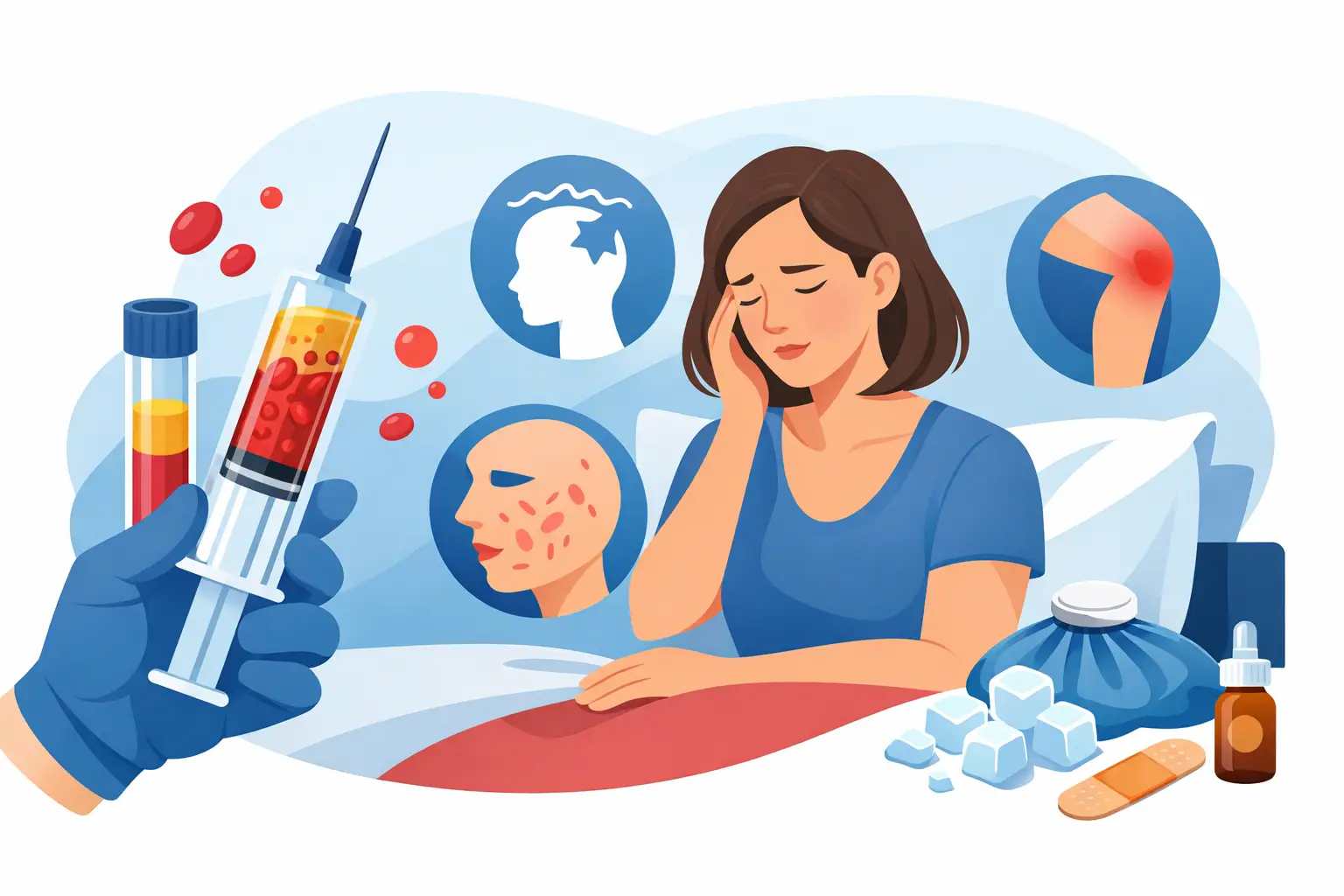
A PRP appointment can feel like a positive step when thinning hair has started to affect how you look in photos, style your hair, or feel when you meet new people. Understanding possible PRP side effects before treatment helps you make that decision with clear expectations, rather than being surprised by normal short-term reactions afterward.
Platelet-rich plasma, often called PRP, uses a concentrated portion of your own blood. A clinician takes a small blood sample, processes it to separate the platelet-rich plasma, then injects it into selected areas of the scalp. For hair restoration, the aim is to support the hair follicles in areas affected by thinning. It is a minimally invasive treatment, but it still involves injections, so some temporary discomfort is expected.
Common PRP side effects after scalp treatment
Most people find that PRP hair treatment has a manageable recovery period. Because the treatment uses your own blood product, there is no concern about a reaction to a donor substance. However, the injections themselves can cause local, temporary effects.
The most common reaction is tenderness at the injection sites. Your scalp may feel sore, tight, or mildly bruised once any numbing product has worn off. This can last from a day or two to several days, depending on the number of injections, the area treated, and your individual sensitivity.
Some patients also notice mild swelling, redness, pinpoint bleeding, or small bumps on the scalp. These are usually related to the needle entry points and settle naturally. A mild headache can also occur, particularly if you are prone to headaches or arrive for treatment dehydrated.
Temporary itching is another possible effect as the scalp settles. Try not to scratch or pick at the treated area. A gentle approach to aftercare protects the skin and gives the injection sites time to recover.
What recovery usually looks like
For many patients, PRP fits well into a busy schedule because there is little downtime. You may be able to return to work and normal non-strenuous activities the same day, provided you feel comfortable. That said, your scalp may look slightly red or feel tender, which is worth considering if you have an important event immediately afterward.
Your clinician will give you personal aftercare instructions, but patients are commonly advised to avoid touching the treatment area unnecessarily and to keep the scalp clean. Heavy exercise, excessive heat, swimming, and alcohol may be discouraged for a short period because they can increase redness or swelling. Follow the plan given at your appointment rather than relying on general advice online.
If you use hair growth products, anti-inflammatory medication, supplements, or prescription medications, discuss them before treatment. Some medications and products may need to be paused or timed differently. Do not stop prescribed medication without speaking with the clinician managing your care.
Less common PRP risks to understand
Serious complications from PRP are uncommon when the treatment is performed using appropriate sterile technique by a qualified medical professional. Still, no injectable procedure is entirely risk-free. Knowing the less common possibilities is part of making a properly informed choice.
Infection is a potential risk whenever the skin is punctured. Allergic reactions are less likely with PRP itself because it comes from your own blood, but a reaction can occur to a topical numbing agent, antiseptic, or another product used during the appointment. Bruising may be more noticeable in people who take blood-thinning medication or who bruise easily.
A flare of an existing scalp condition is also possible. If you have active psoriasis, eczema, dermatitis, folliculitis, a skin infection, or open wounds on the scalp, the area should be assessed before proceeding. Treating active inflammation first may be the safer option.
There is also the practical risk of disappointment if expectations are not realistic. PRP is not an instant solution for hair loss, and it does not create the same type of visible density as a hair transplant. Results vary with the cause and stage of hair thinning, overall health, genetics, and whether the recommended treatment schedule is followed.
When should you contact your clinician?
Mild soreness and redness are generally expected. Symptoms that are getting worse instead of better deserve a prompt call to your treating clinic. Seek medical advice if you develop:
- Increasing pain, warmth, spreading redness, or discharge from the injection sites
- Significant or persistent swelling, especially if it affects your face or eyes
- Fever, chills, or feeling generally unwell after treatment
- Signs of an allergic reaction, such as hives, trouble breathing, or swelling of the lips, tongue, or throat
Breathing difficulties or rapid swelling require urgent medical attention. It is always better to ask a question early than to wait and hope a concerning symptom settles on its own.
Who may need extra care before PRP?
A good PRP consultation is not just about discussing hair goals. It should also cover your medical history, current medications, previous reactions to injections, and the condition of your scalp. This protects your health and helps determine whether PRP is likely to be a suitable addition to your hair restoration plan.
People with bleeding or platelet disorders, severe anemia, active infection, certain cancers, or uncontrolled chronic illness may not be ideal candidates. Pregnancy and breastfeeding should also be discussed with a medical professional before elective treatment. If you are taking anticoagulants, have a history of keloid scarring, or are managing an autoimmune condition, individualized advice matters.
PRP may be more effective for some forms of early thinning than for advanced hair loss where follicles are no longer active. In those cases, other options, including surgical hair restoration, may offer a more appropriate route toward the coverage and shape you want. A straightforward assessment can help you avoid investing in a treatment that does not match your starting point or desired result.
How to reduce the chance of unwanted PRP side effects
The best protection begins with choosing a reputable medical setting that performs a proper assessment rather than treating every type of hair loss the same way. Ask who will perform the treatment, how your blood will be processed, what aftercare is provided, and what you should do if you have a concern once you leave the clinic.
Arrive well hydrated, eat as advised before your appointment, and be honest about all medicines and supplements you take. Avoid trying to conceal a scalp infection or recent illness because you are keen to move forward. Rescheduling is often the smarter choice if treatment is not appropriate that day.
Afterward, follow the aftercare instructions closely. Keep your expectations practical too. PRP plans are often delivered as a course of sessions, with changes in shedding, hair quality, and thickness assessed over time rather than overnight. Before-and-after photography can be useful because gradual improvements are easier to judge when you have a consistent baseline.
A confident decision starts with a proper consultation
Hair loss can feel deeply personal, but choosing treatment should never feel rushed. At Essex Boys Medical Group, a consultation gives you the chance to discuss your hair concerns, medical suitability, likely recovery, and whether PRP fits the result you have in mind. The right plan is one that respects both your confidence goals and your health, with clear guidance available before, during, and after treatment.
0 Comments