
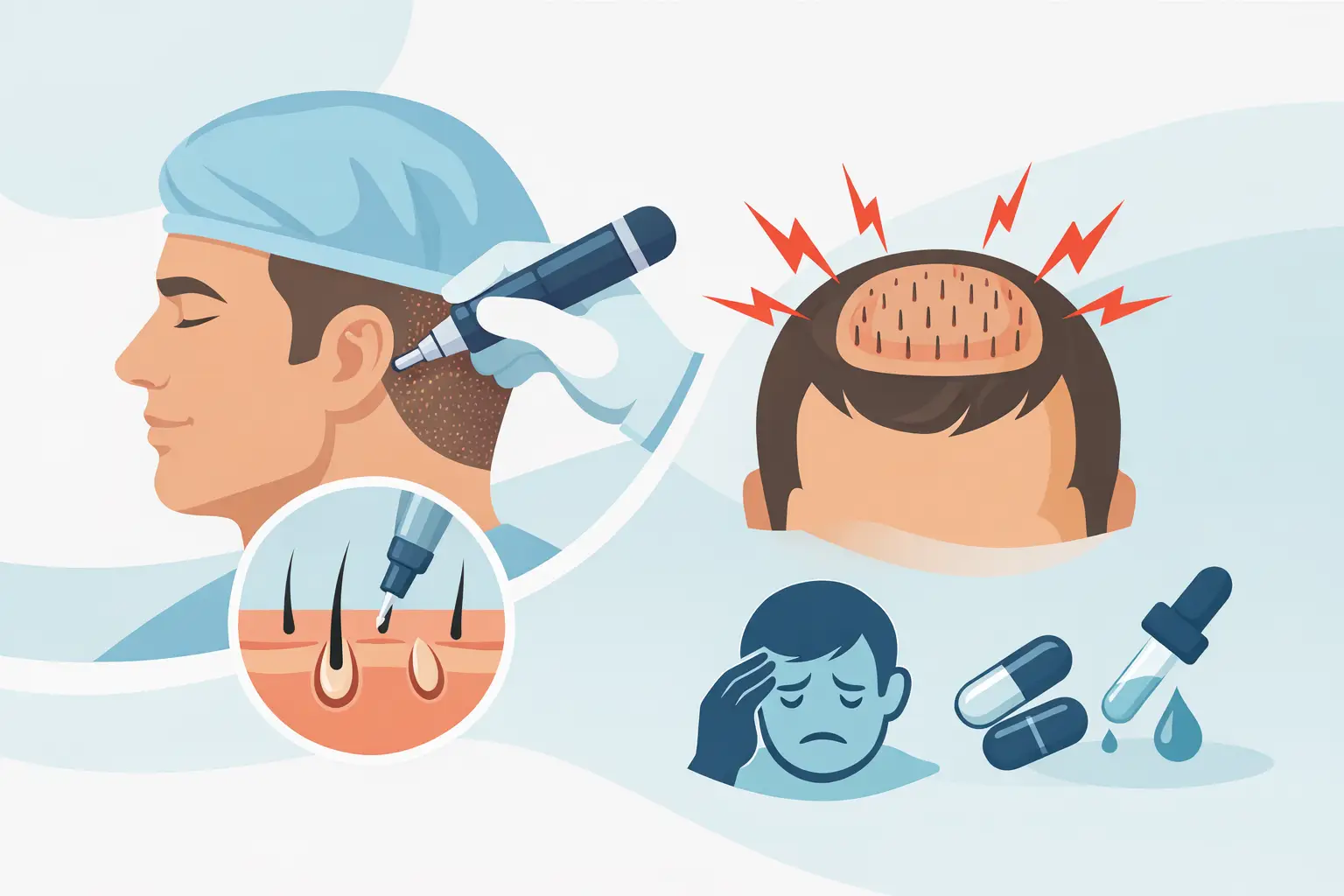
For most people, the question “is FUE transplant painful” comes down to one concern: will restoring your hair mean enduring a difficult procedure? The reassuring answer is that an FUE hair transplant is generally very manageable. Modern local anesthesia keeps you comfortable during the procedure, and any soreness afterward is usually mild and short-lived.
FUE, or follicular unit extraction, is a precise hair restoration technique that removes individual hair follicles from a donor area, usually the back and sides of the scalp, before placing them into thinning areas. You remain awake, but the treatment area is numbed throughout. Most patients say the anticipation is worse than the treatment itself.
Is FUE Transplant Painful During the Procedure?
The part of an FUE transplant that can feel uncomfortable is usually the local anesthetic. Your practitioner uses a series of small injections to numb both the donor area and the area receiving the grafts. You may feel brief pinches or a stinging sensation as the anesthetic is administered.
Once the scalp is numb, you should not feel pain during follicle extraction or implantation. You may notice pressure, movement, or a light pulling sensation, particularly when grafts are being placed, but these sensations should not be painful. If you feel discomfort at any stage, tell your medical team straight away. More anesthetic can be given to keep you comfortable.
A full FUE session can take several hours, depending on the number of grafts needed and the size of the area being treated. Although the procedure is not typically painful, staying in one position for a long period can make your neck, back, or shoulders feel stiff. Clinics usually build in breaks so you can stretch, use the restroom, and eat or drink.
What Does FUE Recovery Feel Like?
After the anesthetic wears off, it is normal to experience mild tenderness in the donor area and some tightness or sensitivity around the transplanted hairline. For many patients, this feels more like a sunburn, mild bruising, or a tender scalp than sharp pain.
The first one to three days are usually the most noticeable. Your practitioner may recommend appropriate pain relief if needed, although many people find over-the-counter medication is enough. Follow the instructions provided by your clinic, as some medications and supplements can affect bleeding or healing.
Small scabs form around the implanted follicles during the first week. This is expected and is part of normal healing. The scalp may also itch as it recovers, but scratching or picking at scabs can disturb the grafts. Gentle washing, as directed by your practitioner, helps keep the area clean while protecting the new follicles.
Swelling is possible, especially around the forehead and eyes if grafts have been placed at the front of the scalp. It is usually temporary and often settles within a few days. Sleeping with your head elevated and following your aftercare plan can help reduce swelling.
Why FUE Is Often Easier Than People Expect
FUE is known for its minimally invasive approach. Unlike older strip-based transplant methods, it does not involve removing a strip of scalp or closing a long incision with stitches. Individual follicles are extracted using a very small punch tool, leaving tiny circular marks in the donor area that typically heal discreetly.
That does not mean FUE is completely sensation-free or that recovery is identical for everyone. Your comfort can depend on your natural sensitivity, anxiety level, the number of grafts, and how your body responds to local anesthetic. A larger session may leave you feeling more tired and tender than a smaller hairline refinement.
Still, most patients are surprised by how straightforward the experience feels once treatment begins. The focus is not on “pushing through” pain. It is on careful planning, effective numbing, precise graft handling, and attentive aftercare that supports a smooth recovery.
The Donor Area Can Feel More Tender
The donor area is often the most sensitive part of recovery because it contains many small extraction sites. It may feel sore when you rest your head on a pillow or touch the back of your scalp during the first few nights. This tenderness typically improves quickly as the sites heal.
You may also notice temporary numbness, tingling, or altered sensation in the donor area. This can happen as small nerves settle after the procedure. In most cases, normal sensation returns gradually over the following weeks or months. Your practitioner should explain what is expected for your individual treatment plan and when to get in touch if something does not feel right.
The recipient area is generally less painful but needs extra care because newly implanted grafts are delicate. Avoid rubbing, tight hats, strenuous exercise, swimming, and direct pressure until your medical team confirms it is safe. Protecting the grafts during these early days is essential for the best possible growth.
How to Make Your FUE Transplant More Comfortable
Good preparation can make a real difference to how relaxed you feel on the day. Get a full night of sleep, eat a sensible meal beforehand if your clinic allows it, and wear comfortable clothing that buttons or zips at the front. You do not want to pull a shirt over your head after treatment and risk catching the grafts.
Be open about any medication you take, allergies, medical conditions, or previous reactions to anesthetic. Your clinician needs this information to plan treatment safely. It is also sensible to arrange a ride home, particularly if you have been given medication that affects alertness.
After the procedure, give yourself permission to take it easy. Plan a few quiet days, keep your head elevated when resting, and follow your washing and medication instructions exactly. Avoid alcohol, smoking, and intense workouts for the period recommended by your clinic, as these can interfere with healing.
Pain Is Not the Only Question to Ask
Comfort matters, but it should not be the only deciding factor when considering a hair transplant. The quality of your result depends on the experience of the medical team, a realistic assessment of your donor supply, the design of your hairline, and a graft plan that suits your future hair-loss pattern.
A skilled consultation should address what FUE can achieve for you, not simply promise the biggest possible graft number. For some people, PRP hair treatment, medication, or a combination approach may help protect existing hair alongside a transplant. For others, waiting until hair loss has stabilized may be the smarter decision.
Be wary of anyone who makes the process sound completely effortless or guarantees a specific density without examining your scalp. FUE is a medical procedure, and the best outcomes come from honest planning as well as careful technique.
When Should You Contact Your Clinic?
Mild soreness, redness, scabbing, itching, and temporary swelling can all be normal after FUE. However, contact your clinic promptly if you develop increasing pain rather than improving discomfort, significant bleeding, spreading redness, fever, unusual discharge, or swelling that concerns you. Getting professional advice early is always better than trying to diagnose a problem yourself.
At Essex Boys Medical Group, the aim is to make hair restoration feel clear, comfortable, and confidence-focused from your first consultation through recovery. A personal assessment gives you the opportunity to discuss pain control, downtime, expected growth, and whether FUE is the right route for your goals.
If thinning hair has made you avoid photos, style your hair differently, or feel less like yourself, do not let fear of pain make the decision for you. Ask the right questions, choose experienced medical care, and give yourself the chance to feel confident when you see your reflection again.
0 Comments