
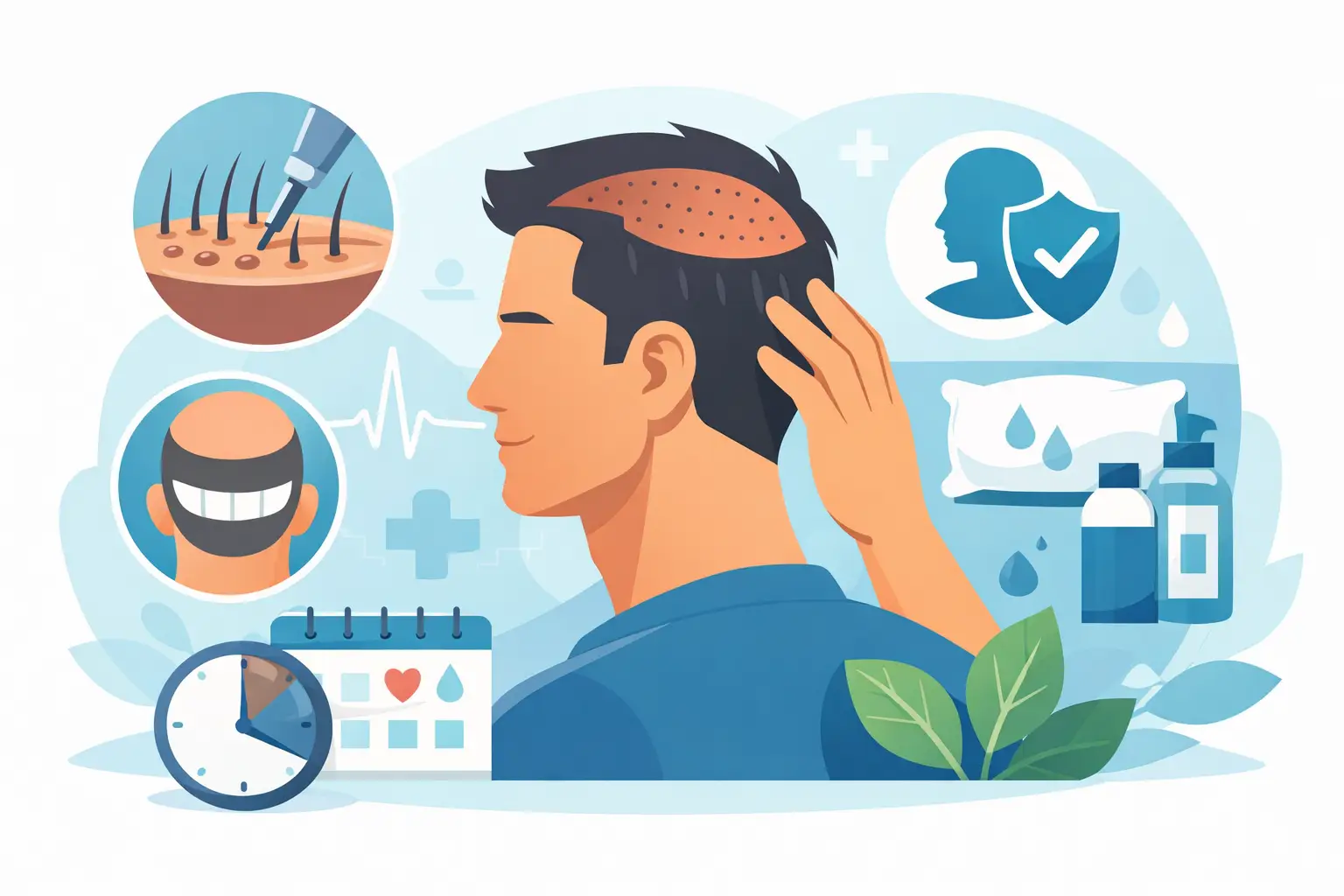
The first few weeks after a hair transplant are an important part of the recovery process. This hair transplant recovery guide explains what healing commonly involves, general aftercare considerations and some of the changes that may occur during the months following treatment.
Recovery varies between individuals, and instructions provided by your treating clinician should always take priority over general information.
A hair transplant is designed to create a natural-looking, lasting improvement, but the procedure is only one part of the result. Your scalp needs time to settle, the transplanted follicles need time to establish themselves, and visible growth follows its own gradual schedule. Following your clinician’s individual instructions should always come first, especially if they differ from general guidance.
The First 72 Hours: Protect the Grafts
The newly transplanted grafts are most delicate in the first several days. Your priority is simple: avoid rubbing, scratching, pressure, and anything that could disturb the treated area. Mild swelling, tenderness, tightness, or small scabs can be expected. These are normal signs that the scalp is healing.
Sleep with your head elevated for the first few nights if your clinician advises it. A few extra pillows or a travel pillow can help you stay on your back and reduce the chance of rolling onto the recipient area. Some patients notice swelling around the forehead or eyes after a procedure. This usually settles within several days, but contact your clinic promptly if swelling is severe, painful, or worsening.
Avoid strenuous exercise, bending repeatedly at the waist, and heavy lifting during this early period. Increased blood flow and sweating can aggravate swelling and irritate the healing scalp. You should also avoid alcohol and smoking, as both can interfere with the body’s healing response.
Washing Your Hair Without Disturbing Healing
Washing is often the part of recovery patients feel most nervous about, and understandably so. The goal is to keep the area clean while treating it with exceptional care. Your provider will tell you when to begin and which products to use. In many cases, gentle washing starts after the first few days, but timing can vary based on your procedure and scalp condition.
Use lukewarm water and avoid a direct, high-pressure shower stream on the transplanted area. Rather than rubbing shampoo into the grafts, apply any recommended cleanser gently and let water run over the scalp. Pat dry carefully without dragging a towel across the recipient site.
Scabbing is common and should not be picked off. It may be tempting to remove visible flakes, particularly along a new hairline, but forcing them off too early can irritate the skin and potentially disturb a graft. They generally soften and shed naturally as washing resumes and healing progresses.
Hair Transplant Recovery Guide: The First Two Weeks
By the end of the first week, discomfort is usually easing and scabs are beginning to clear. Many people feel ready to return to desk work or quiet social plans within several days, depending on how visible the treated areas are and how they personally feel. If you have a client-facing role or simply prefer more privacy, allow yourself extra time before returning to normal routines.
During the first two weeks, keep protecting the scalp from direct sun exposure. A loose, clean hat may be permitted after a certain point, but do not wear anything tight or abrasive without approval from your clinician. Heat, sunburn, dusty environments, and heavy sweating can all make a healing scalp more uncomfortable.
You should also hold off on swimming. Pools, hot tubs, lakes, and the ocean can expose healing skin to bacteria, chlorine, salt, and irritation. Your clinic can give you a specific timeline for getting back in the water.
Most patients are advised to avoid the following until they have been cleared:
- Intense gym sessions, contact sports, and high-sweat activities
- Saunas, steam rooms, and very hot showers
- Hair dye, chemical treatments, and styling products near the grafts
- Close-fitting helmets, caps, or headwear that creates pressure
- Scratching, picking, or aggressive brushing of the scalp
These restrictions are temporary, but they can make a real difference to comfort and recovery. A short period of patience supports a better-looking long-term result.
The Shedding Phase Can Be Normal
One of the most surprising stages of recovery is shedding. Between a few weeks and a few months after treatment, the newly transplanted hairs may fall out. This can look alarming if you were expecting immediate fullness, but it is often a normal part of the process.
The transplanted follicles remain beneath the skin while the visible hair shaft sheds. After a resting phase, those follicles begin producing new hair. Think of it as the scalp resetting before the real growth phase starts. This temporary shedding does not automatically mean the transplant has failed.
Existing hair around the treatment area can also appear thinner for a time, particularly if it has been affected by surgical stress. Your clinician can explain what is expected for your specific hair-loss pattern and transplant method. If you notice persistent bleeding, discharge, spreading redness, fever, or escalating pain, seek medical advice promptly rather than waiting for a routine follow-up.
When Will New Hair Growth Be Visible?
Hair transplant recovery rewards realistic expectations. Most people do not see a meaningful cosmetic change in the first month. Early new growth often begins around three to four months, although it can be fine, soft, and uneven at first.
By around six months, many patients begin to see a more noticeable change in density and shape. Hair continues to mature in texture, thickness, and coverage for up to 12 months, and sometimes longer for crown work. The crown can take more patience than the frontal hairline because of its natural growth patterns and the area’s size.
Results depend on several factors: your existing donor hair, the extent of thinning, the quality and placement of grafts, your healing response, and whether hair loss continues in untreated areas. A transplant redistributes healthy follicles. It does not stop future genetic hair loss, which is why some patients may benefit from a long-term plan that includes clinically appropriate hair-loss treatment or PRP therapy.
Returning to Your Routine
A gradual return is usually the smart approach. Light walking may be fine quite soon, but wait for clearance before restarting running, weight training, cycling, or sports. If your work involves physical labor, heat, dust, or safety equipment worn on the head, ask for personalized guidance before returning.
You can usually reintroduce normal grooming over time, but avoid rushing into a fresh haircut, hair color appointment, or strong styling products. Your scalp may feel and look healed before it is fully ready for every cosmetic treatment. Let your clinician set the timeline.
It also helps to plan your social calendar realistically. Redness, minor swelling, scabbing, and a temporarily shorter or uneven look are all possible early on. This is not the glamorous part of hair restoration, but it passes. The confidence boost comes later, as your hairline settles and new growth begins to frame your face naturally.
Make Your Recovery Part of the Result
The best recovery plan is not complicated. Follow your aftercare instructions, give your scalp the protection it needs, and avoid judging your result too early. Taking progress photos once a month in the same lighting can be more reassuring than checking the mirror every day, because gradual growth is easier to see over time.
At Essex Boys Medical Group, the goal is not simply to perform a procedure, but to help you move toward a look that feels like you again. Give the healing process the patience it deserves, and let every stage bring you closer to wearing your hair with confidence.
0 Comments