
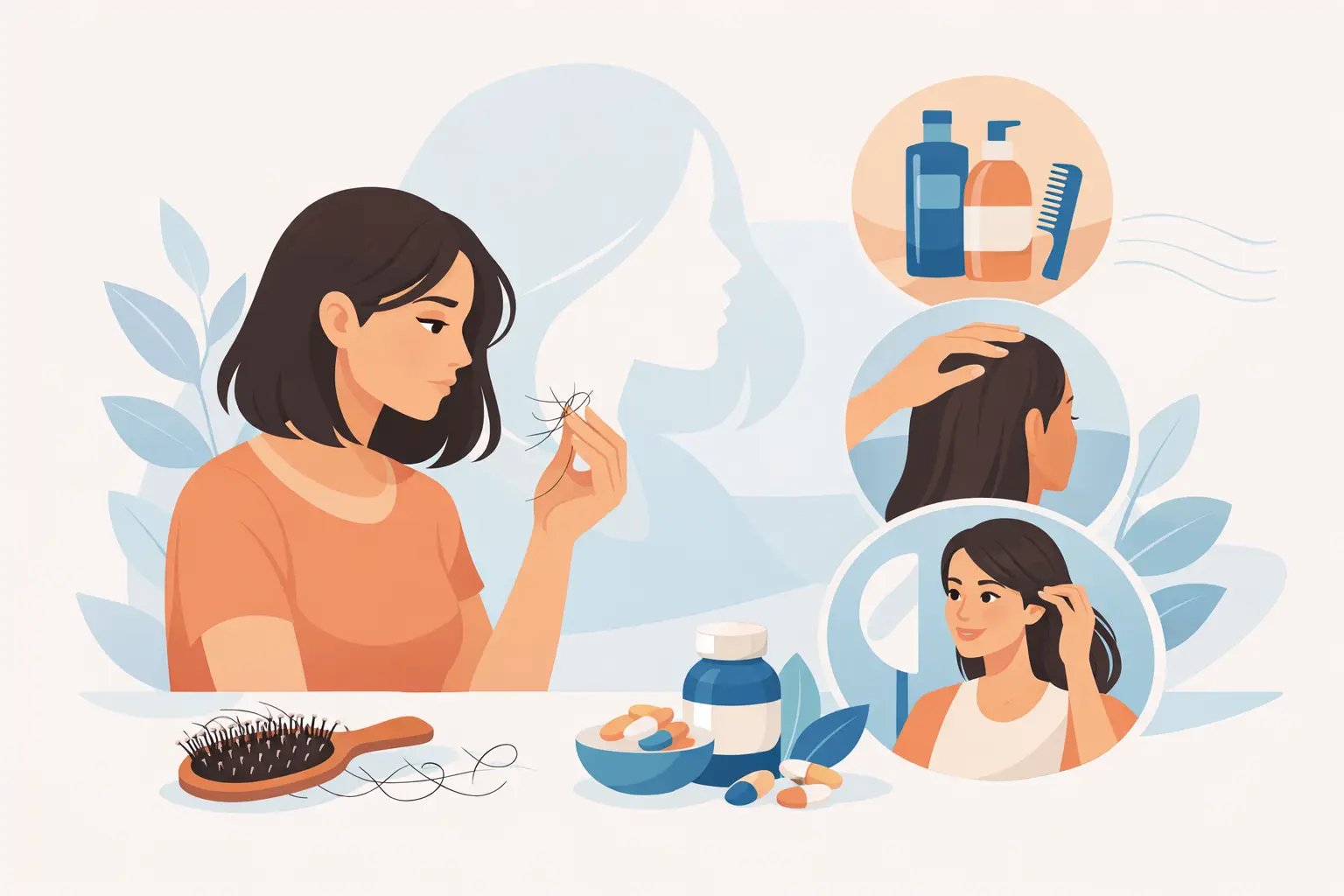
A widening part, extra hair in the shower drain, or a ponytail that suddenly feels thinner can affect far more than your morning routine. The right female hair shedding solutions begin with understanding why the shedding started, then choosing a treatment plan that protects your existing hair and supports the look you want to see in the mirror.
Hair shedding is common, but that does not make it easy to live with. For many women, hair is closely tied to confidence, style, and feeling attractive. When it starts to thin, quick fixes can be tempting. A better route is a private consultation that looks at the pattern of loss, your medical history, and the realistic options available to you.
Why Female Hair Shedding Can Happen
It is normal to lose some hairs every day as part of the natural growth cycle. Noticeable shedding can occur when more follicles than usual move into the resting phase at the same time. This is often called telogen effluvium, and it may become apparent a few months after a trigger.
Common triggers include a stressful period, illness, surgery, rapid weight loss, childbirth, hormonal changes, restrictive dieting, or low iron levels. Thyroid concerns, certain medications, and scalp conditions can also play a role. In some cases, the shedding settles once the underlying trigger has passed. In others, it reveals an ongoing tendency toward female pattern hair loss, where the part gradually becomes broader and hair density reduces over time.
The distinction matters. Temporary diffuse shedding may need reassurance, time, and attention to the cause. Pattern thinning may benefit from a longer-term hair restoration strategy. Starting treatment without identifying the pattern can lead to frustration and money spent on options that do not match your needs.
Signs You Should Arrange an Assessment
A professional assessment is especially worthwhile if shedding has continued for several months, your scalp is visible in new areas, or you notice a clear change in your hairline or part. Seek medical advice promptly if hair loss is sudden, patchy, painful, or accompanied by itching, scaling, fatigue, unexpected weight changes, or other symptoms.
A clinician may discuss your health history, hair-care habits, stressors, family history, and any recent changes in medication or diet. Depending on your symptoms, they may recommend medical evaluation or blood tests before aesthetic treatment is considered. This is not a delay in getting results. It is how you build a plan on solid ground.
Female Hair Shedding Solutions: Start With the Cause
The most effective approach is rarely one-size-fits-all. Some women need to address a health or lifestyle trigger first. Others are suitable for treatments designed to improve the quality and density of thinning hair. Your treatment should fit the cause, the amount of existing hair, your budget, and how quickly you want to see a cosmetic change.
Addressing Lifestyle and Medical Factors
If shedding follows a major event such as childbirth, illness, or extreme dieting, regrowth may gradually improve as the body recovers. Consistent nutrition matters, particularly adequate protein and any nutrients identified as low through appropriate testing. Avoid assuming that high-dose supplements will fix hair loss. Taking supplements you do not need can be unhelpful and, in some cases, counterproductive.
Gentler styling can also reduce breakage while your hair is vulnerable. Limit tight extensions and hairstyles that pull at the roots, frequent bleaching, and high-heat styling. These changes do not cure follicle-related hair loss, but they can help the hair you have look healthier and reduce avoidable damage.
Prescription or over-the-counter medical treatments may be appropriate for some forms of female pattern hair loss. Suitability, side effects, pregnancy considerations, and ongoing use should always be discussed with a qualified medical professional. Hair restoration works best when health decisions are made safely, not based on social media promises.
PRP Hair Treatment for Thinning Hair
Platelet-rich plasma, commonly known as PRP, is a popular option for women with early thinning or reduced density. The treatment uses a small sample of your own blood. The platelet-rich portion is prepared and placed into targeted areas of the scalp, with the aim of supporting the follicles and improving the quality of growing hair.
PRP is not an instant volume treatment. It is generally performed as a course, with follow-up sessions depending on your response and the plan recommended at consultation. Many patients choose it because it uses their own plasma, requires minimal downtime, and can be incorporated into a wider strategy for maintaining existing hair.
Results vary. PRP may be more suitable when follicles are still active than in areas that have been smooth and bare for years. It also cannot correct an untreated medical cause of shedding. A clear conversation about expected improvement is essential: the goal may be stronger-looking, fuller hair and less visible scalp, rather than a dramatic overnight transformation.
When a Hair Transplant May Be an Option
A hair transplant can be a powerful solution for carefully selected women with stable, established thinning or localized loss and a suitable donor area. During the procedure, healthy follicles are moved from the donor region to areas where more density is desired. Once transplanted hairs grow, they can provide a long-lasting improvement in coverage.
However, a transplant is not automatically the best answer for active diffuse shedding. If hair loss is ongoing across the scalp, removing donor hair may not produce the balanced result you want. The hair must also be stable enough for a surgeon to design a natural-looking plan that protects your long-term appearance.
This is where an honest consultation makes a difference. A reputable provider should tell you when PRP, medical management, or a period of observation is more appropriate than surgery. If a transplant is suitable, planning should focus on density, donor preservation, your future pattern of loss, and a result that looks natural in every light.
How to Choose the Right Treatment Plan
The best plan is one you can realistically maintain. Before committing to any female hair shedding solution, ask what is causing the loss, what improvement is achievable, how long results may take, and whether maintenance treatment will be needed. Also ask about side effects, downtime, and the cost of a complete course rather than only the first session.
Photos taken in consistent lighting can be useful for tracking change. Hair grows slowly, so progress is often measured in months, not days. This can be difficult when you are feeling self-conscious, but it prevents you from abandoning a sensible plan too soon or switching between treatments without giving any of them a fair chance.
Cosmetic camouflage can help during that waiting period. A new cut, thoughtful color placement, volumizing products, scalp concealers, or professionally fitted hair systems can create an immediate confidence boost. These are not substitutes for diagnosis or treatment, but they can make a meaningful difference while you work toward longer-term improvement.
A More Confident Next Step
Hair shedding can feel personal, but you do not have to guess your way through it. At Essex Boys Medical Group, a private consultation can help you understand whether PRP hair treatment, a future transplant plan, or medical investigation is the right next move for your goals. You deserve straightforward answers, realistic options, and a plan built around helping you feel more like yourself again.
The most helpful next step is simple: arrange an assessment while you still have questions, rather than waiting for thinning to become the thing you think about every time you style your hair.
0 Comments