
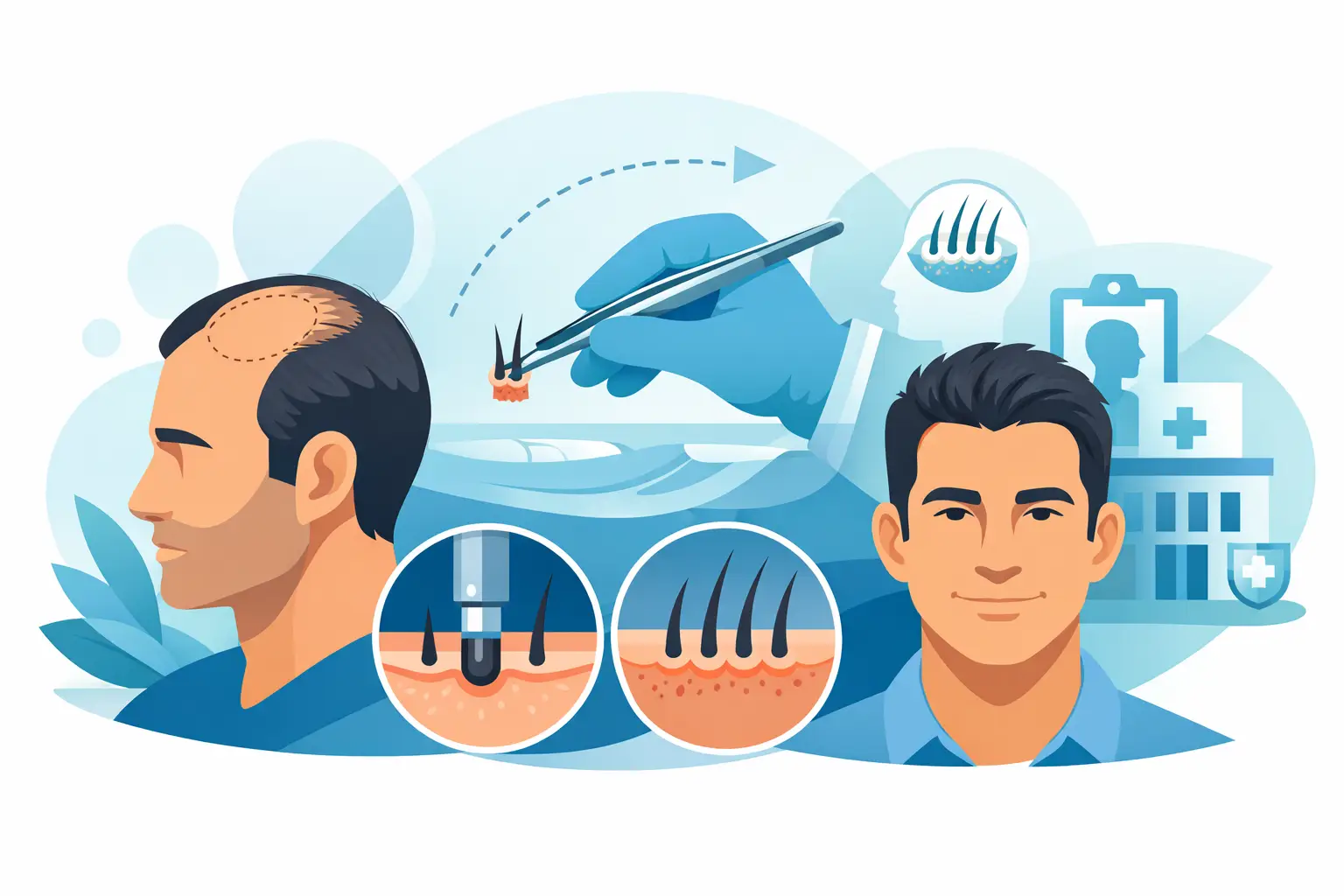
Hair transplant surgery can be performed using different techniques, and there is no single approach that is appropriate for everyone. The choice of treatment depends on factors such as the type and extent of hair loss, donor hair availability, hair characteristics, medical history and long-term treatment goals.
An individual assessment can help determine whether hair transplant surgery is appropriate and, if so, which technique and treatment plan may be considered.
For many people, hair restoration is a practical way to regain a fuller appearance without relying on concealers, hats, or constant changes to their hairstyle. The right approach starts with an honest consultation, clear medical advice, and a plan designed around the hair you have now and the hair you may lose in the future.
The Best Hair Transplant Solution Starts With Your Hair Loss Pattern
Hair loss does not look the same on everyone. Some people notice gradual thinning through the crown. Others see the temples move back, a widening part, or a more exposed hairline. The cause, speed, and stability of hair loss all influence whether a transplant is appropriate and how it should be designed.
A good clinical assessment looks at the quality and density of the donor area, usually at the back and sides of the scalp, as well as the areas that need coverage. It also considers your age, family history of hair loss, hair texture, and future goals. A low, dense hairline may look attractive in the short term, for example, but it may not be the most sensible choice if hair loss is likely to continue behind it.
The aim is not to create an unrealistic result. It is to create a hairline and density pattern that look balanced, age-appropriate, and convincing from normal social distances. That is where experienced planning makes a visible difference.
FUE or FUT: Which Hair Transplant Is Right for You?
The two best-known surgical methods are follicular unit extraction, often called FUE, and follicular unit transplantation, known as FUT. Both involve moving healthy hair follicles from a donor area to thinning or bald areas. Neither is automatically the best choice for every patient.
FUE for Shorter Hairstyles and Minimal Linear Scarring
With FUE, individual follicular units are carefully removed from the donor area and placed into tiny recipient sites. Because follicles are extracted one by one, FUE does not leave a long linear scar. This can make it an appealing option for people who prefer shorter haircuts or want a discreet donor-area appearance after healing.
FUE can be highly effective for restoring a receding hairline, filling in thinning temples, adding density to the crown, or treating smaller areas of loss. Recovery is often straightforward, although you should still expect temporary redness, scabbing, and a period when the newly transplanted hairs shed before growth begins.
The trade-off is that FUE requires careful management of the donor area. Removing too many follicles or spreading extractions poorly can affect the appearance of the donor hair. A skilled treatment team plans extraction patterns conservatively to protect the long-term look of the area.
FUT for Larger Graft Requirements
FUT involves removing a narrow strip of donor-bearing skin, which is then divided into individual grafts under magnification. The donor area is closed with a fine linear scar that is typically hidden by surrounding hair.
For some patients, FUT can be an efficient way to obtain a larger number of grafts in one session. It may be worth discussing if you have more extensive hair loss, good scalp flexibility, and normally wear your hair at a length that will cover the donor scar.
The recovery experience and scar profile are different from FUE, so the choice often comes down to your hair goals, donor capacity, scalp characteristics, and styling preference. A consultation should explain these differences clearly rather than steering you toward one method without considering the full picture.
Why a Hairline Design Matters as Much as the Technique
A technically successful transplant can still look unnatural if the hairline is too straight, too low, too dense, or poorly matched to your facial features. Natural hairlines have subtle irregularity. They frame the face without looking sharply drawn on.
For frontal hair restoration, finer single-hair grafts are often used at the leading edge to create a soft transition. Denser groupings can then be placed behind the hairline to build coverage. The angle and direction of each graft also matter. Hair that grows in the wrong direction can look noticeably different, particularly around the temples and crown.
This is why the best results are never just about graft numbers. A larger graft count does not automatically mean a better outcome. Thoughtful placement, donor preservation, and a design that complements your face are what make a transplant look like your own hair, not a procedure.
Where PRP Can Fit Into Your Hair Restoration Plan
A hair transplant is not always the first or only answer. If you are experiencing early thinning, platelet-rich plasma treatment, or PRP, may be recommended as part of a wider plan. PRP uses a concentrated preparation from your own blood, which is injected into targeted areas of the scalp.
PRP is often chosen by people who want to support existing hair, address early thinning, or complement surgical restoration. It cannot create new follicles in an area where there is no active hair growth, so it is not a substitute for a transplant when significant baldness needs coverage. However, it may be useful for maintaining and improving the appearance of vulnerable existing hair, depending on your individual assessment.
For some patients, the strongest approach combines treatments. PRP may support overall scalp and hair quality, while a transplant rebuilds a hairline or restores density in areas where hair has already been lost. The right combination depends on what your scalp can realistically achieve.
What Results and Recovery Really Look Like
Hair transplantation is a long-term aesthetic procedure, not an overnight change. In the first days after treatment, the recipient area needs gentle care. Small scabs are expected, and your clinic will provide specific washing and aftercare instructions. Avoiding heavy exercise, direct sun exposure, and friction during the early recovery period is usually advised.
The transplanted hairs commonly shed within the first few weeks. This can feel alarming, but it is a normal part of the process. The follicles remain beneath the skin and enter a resting phase before new growth starts. Early growth may appear within a few months, with density and texture continuing to improve over time. Many patients see their more established result between 9 and 12 months, although crown areas can take longer.
Patience is part of the investment. The benefit is that transplanted follicles are generally selected from areas more resistant to pattern hair loss. They are designed to keep growing in their new location, giving the result lasting potential when the treatment has been properly planned.
Questions to Ask Before Choosing a Clinic
Your consultation should feel personal, not rushed. You deserve to understand who will plan and perform your procedure, which technique is being recommended, how many grafts may be required, and what kind of result is realistic for your degree of hair loss.
Ask to see examples that are relevant to your hair type and concern. A great temple restoration may not tell you much about a dense crown result, and vice versa. You should also ask about aftercare, follow-up appointments, and whether future hair loss has been considered in the proposed design.
Price matters, but it should not be the only deciding factor. A cheap procedure can become expensive if poor graft placement, an overharvested donor area, or an unnatural hairline later requires corrective work. Choose a provider that focuses on safety, honest advice, and results that still look good years from now.
At Essex Boys Medical Group, hair restoration consultations are designed to give you clear answers, practical options, and a direct route toward treatment if it is right for you. Whether you are noticing early thinning or want to restore a more confident hairline, the first step is understanding what your own hair can support.
The right hair transplant should help you look refreshed, not changed. A personal assessment can turn uncertainty into a realistic plan for fuller-looking hair and greater confidence every time you see yourself in the mirror.
0 Comments