
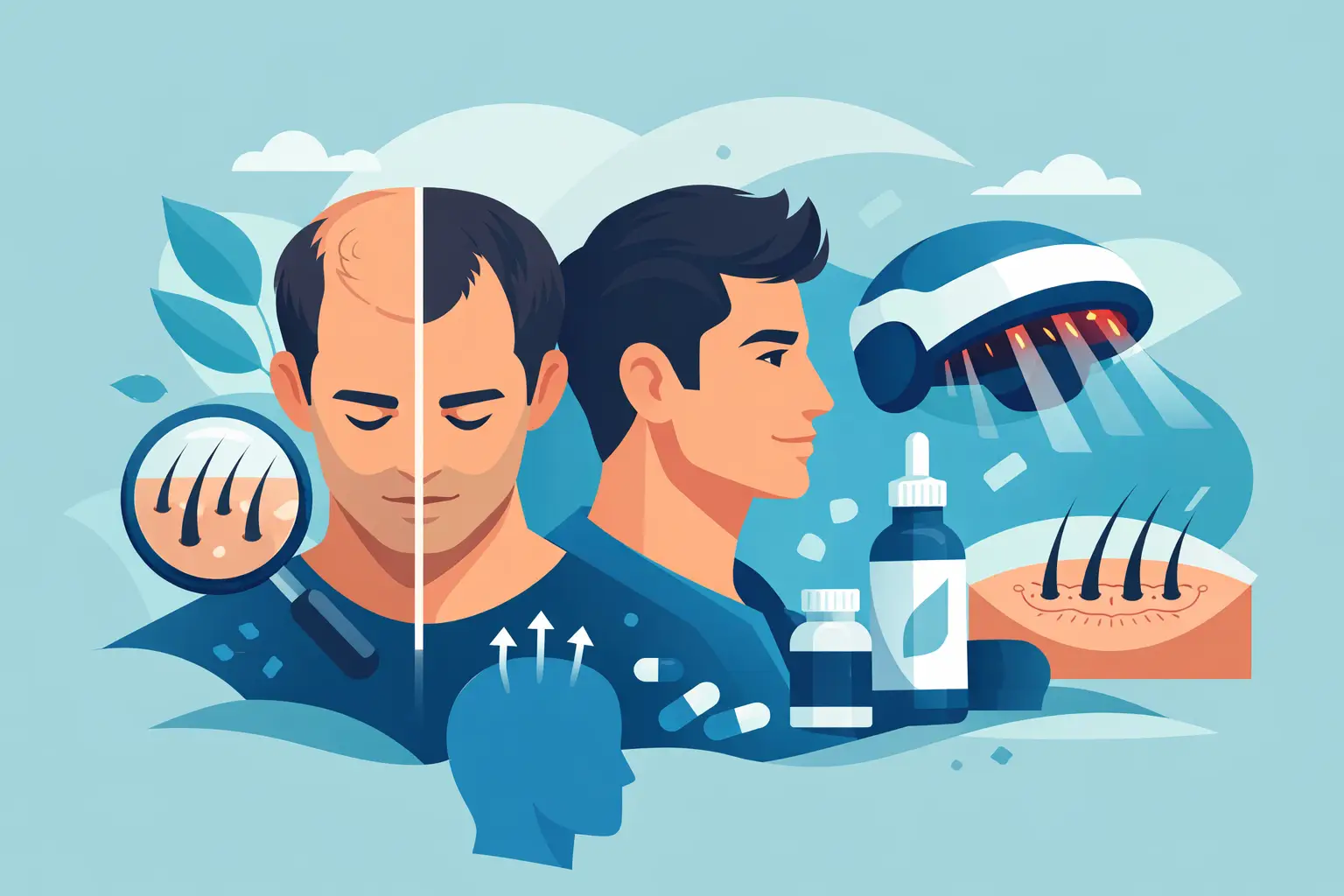
A receding hairline can change how you feel when you look in the mirror, step into a meeting, or pose for a photo. The good news is that the best hair loss solutions for men are no longer limited to hiding thinning areas or accepting the change. From clinically supported medications to PRP treatment and permanent hair restoration, there are practical options for different stages of hair loss and different goals.
The right choice depends on what is causing your shedding, how much density you have lost, and how quickly you want to see a visible change. A personalized assessment matters because treating early thinning is very different from rebuilding a hairline that has already receded significantly.
Why Men Lose Hair
Male pattern baldness is the most common cause of hair loss in men. It is largely genetic and linked to sensitivity to DHT, a hormone that can gradually shrink hair follicles. The result is usually a receding hairline, thinning at the crown, or both.
Not every case is male pattern baldness. Stress, rapid weight loss, illness, nutritional deficiencies, certain medications, scalp conditions, and hormonal changes can also trigger shedding. If hair loss is sudden, patchy, painful, or accompanied by scalp irritation, speak with a medical professional before choosing a cosmetic treatment.
For most men, the key is acting before follicles become permanently inactive. Early treatment may help preserve existing hair, while more advanced loss may call for a restorative procedure.
Best Hair Loss Solutions for Men: Your Main Options
There is no single treatment that suits every man. Some solutions are designed to slow further loss, while others focus on improving thickness or replacing hair in areas where it is no longer growing. The strongest plan may combine more than one approach.
Prescription and over-the-counter medication
Medications can be a sensible starting point for men with early to moderate pattern hair loss. Topical minoxidil is applied directly to the scalp and may help support hair growth by extending the growth phase of the hair cycle. It requires consistent use, and results generally take several months to become noticeable.
Finasteride is a prescription medication that works by reducing DHT levels. For suitable patients, it can help slow ongoing loss and maintain existing hair. However, prescription treatment should always be discussed with a qualified clinician, as potential side effects and medical suitability need to be considered carefully.
Medication is often best for protecting the hair you still have. It is less predictable when the goal is to restore a long-bare hairline or a large area of scalp.
PRP hair loss treatment
PRP, or platelet-rich plasma, uses a concentrated sample of your own blood. After a small blood draw, the platelet-rich portion is prepared and injected into targeted areas of the scalp. Platelets contain growth factors that may support follicle activity and improve the environment around thinning hair.
PRP can be an attractive option for men who want a non-surgical treatment with minimal downtime. It is commonly considered for early thinning at the crown, diffuse loss, or a hairline that is beginning to weaken but still contains active follicles.
Results are gradual rather than instant. Most treatment plans involve an initial series of sessions followed by maintenance appointments, depending on your response and the level of hair loss. PRP does not create new follicles, so it is not a substitute for a transplant in completely bald areas. It can, however, be a valuable way to improve the appearance and quality of thinning native hair.
Hair transplant surgery
A hair transplant is the most effective option for many men seeking a lasting improvement in hairline shape, frontal density, or crown coverage. The procedure moves healthy, DHT-resistant follicles from a donor area, usually the back and sides of the scalp, into thinning or bald areas.
Modern transplant techniques are designed around natural-looking placement. The quality of the result depends on thoughtful hairline design, correct graft angles, donor management, and a plan that takes future hair loss into account. A good transplant should look appropriate not just immediately after growth, but years later as you age.
There is a recovery period, and transplanted hairs typically shed before new growth begins. Visible growth often starts around three to four months, with fuller results developing over the following months. Patience is part of the process, but for suitable candidates, the change can be significant and long-lasting.
A transplant is not automatically the right answer for everyone. Men with unstable hair loss, limited donor supply, or unrealistic expectations may be better served by medical treatment first, or by a combined strategy that protects existing hair before surgery.
Low-level laser therapy
Low-level laser therapy uses light energy intended to stimulate follicle activity. It is available through clinic-based devices and at-home helmets, caps, or combs. Some men choose it as an additional treatment rather than a standalone solution.
The main trade-off is consistency. Devices must be used regularly over time, and improvements tend to be subtle. It may be worth discussing if you have early thinning and want a non-invasive option, but it is not usually the strongest choice for advanced hair loss.
Scalp micropigmentation and hair systems
For men who keep their hair very short, scalp micropigmentation can create the look of a closely shaved, fuller hairline by placing tiny pigment deposits into the scalp. It does not regrow hair, but it can reduce the contrast between scalp and remaining hair.
High-quality hair systems are another non-surgical way to achieve immediate coverage. They can look convincing when fitted and maintained properly, but they require regular upkeep and do not address the underlying cause of hair loss. These options can be useful for men who are not candidates for surgery or who want a cosmetic result without waiting for growth.
Choosing the Right Treatment for Your Stage of Hair Loss
If you have only recently noticed a widening part, mild crown thinning, or a slowly receding hairline, your priority may be to protect and strengthen existing hair. Medication, PRP, and laser therapy may all be worth considering depending on your medical history and preferences.
If your hairline has moved back substantially or you have clear bald patches, a transplant consultation may offer a more direct route to visible coverage. The goal is not simply to place as many grafts as possible. It is to design a hairline and density plan that looks natural, suits your facial features, and uses your donor hair responsibly.
Men with widespread thinning often benefit from a combination plan. For example, PRP or clinically appropriate medication may be used to support native hair, while a transplant restores areas where density has been lost. This approach can help create a more balanced, believable result.
What to Ask at a Hair Restoration Consultation
A proper consultation should feel clear, not pressured. You should understand the likely cause of your hair loss, the options that fit your stage of thinning, and what each treatment can realistically achieve.
Ask how your donor area will be assessed if you are considering a transplant, whether your current hair loss is stable, and whether ongoing treatment may be recommended after surgery. You should also ask about recovery, expected timelines, maintenance, risks, and the total cost of your treatment plan.
Be cautious of anyone promising guaranteed density or an instant transformation. Hair restoration is highly personal. The best outcomes come from realistic planning, skilled medical care, and choosing a treatment that matches your hair loss pattern rather than chasing a one-size-fits-all answer.
A Better Time to Act Is Before Hair Loss Advances
Hair loss can feel frustrating, but it does not have to control your confidence. Whether you want to preserve early thinning with PRP, explore medically guided treatment, or create a stronger hairline with a transplant, the first step is getting honest advice based on your scalp, your goals, and the look you want to achieve.
A private consultation can give you clarity on what is possible and help you move forward with a plan that lets you look sharper, feel more confident, and stop second-guessing your reflection.
0 Comments