
One of the most common questions about PRP hair treatment is how long the effects may last. The answer varies between individuals and can depend on factors such as the type and stage of hair loss, individual response to treatment and whether maintenance sessions are recommended.
That distinction matters. PRP is not designed to create a one-time cure for every type of hair loss. It is a regenerative treatment that uses your own platelet-rich plasma to stimulate weakened hair follicles. For many patients, that means fuller-looking hair, better density, and a noticeable confidence boost. What it does not mean is that hair loss has been switched off forever.
Is PRP for hair loss permanent, or does it need upkeep?
In most cases, PRP needs upkeep. Hair loss is often progressive, especially when it is linked to genetics, age, hormones, or ongoing shedding patterns. PRP can help improve the condition of existing follicles, but it does not remove the underlying cause of thinning. That is why many patients begin with an initial treatment series and then move into maintenance sessions.
Think of PRP as a way to support hair that is struggling, not a way to permanently replace what is already gone. If the follicles are still alive but miniaturizing, PRP may help them perform better. If the follicles are no longer active, PRP is less likely to bring meaningful regrowth.
This is where expectations need to be realistic. Some people respond very well and maintain stronger hair with occasional follow-up sessions. Others see a modest improvement that needs more active management. The treatment can absolutely be worthwhile, but permanence is not the right promise.
How PRP works for thinning hair
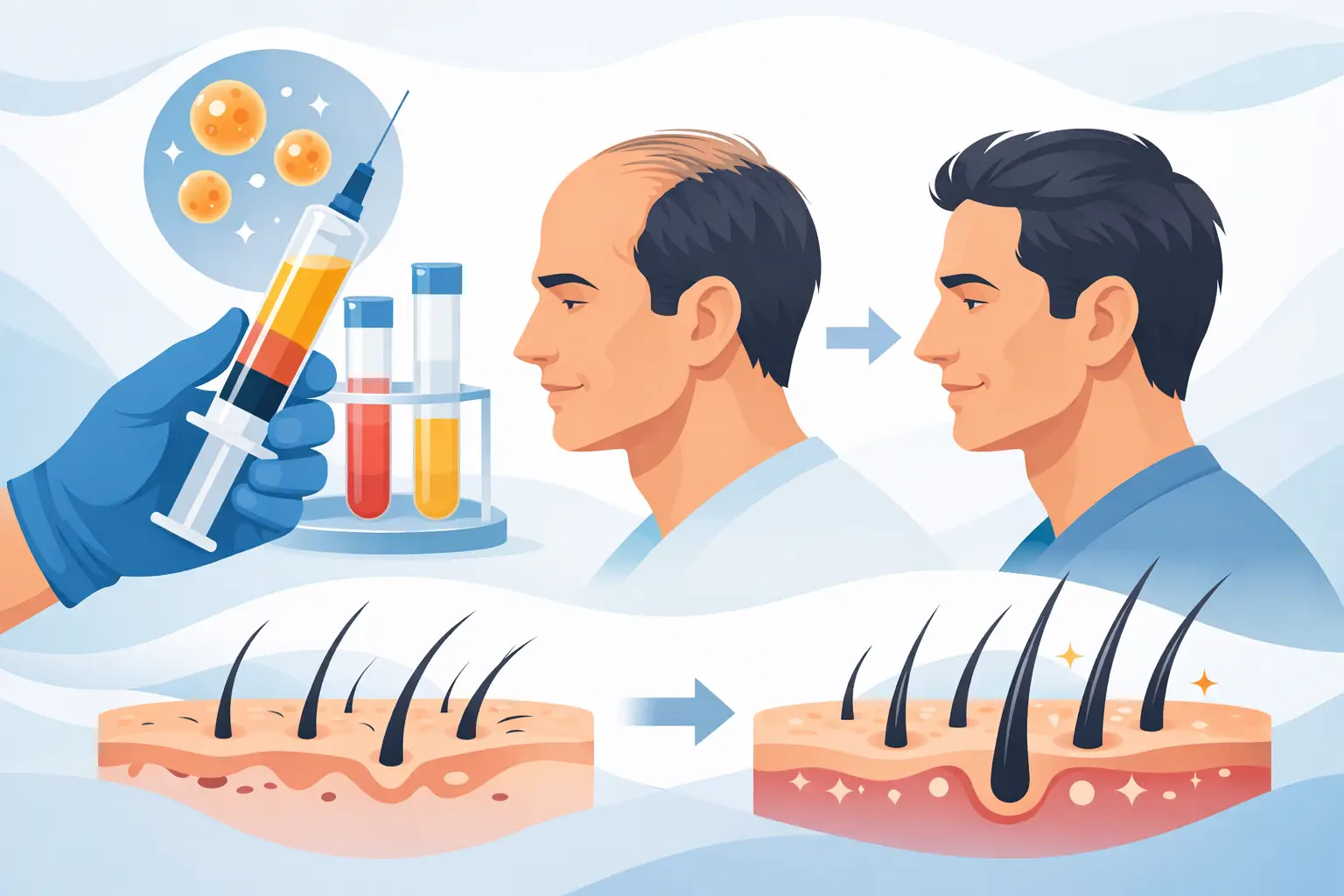
PRP stands for platelet-rich plasma. The treatment starts with a small blood draw. That blood is processed to separate out a concentrated plasma layer rich in platelets and growth factors. The PRP is then injected into targeted areas of the scalp where hair is thinning.
Those growth factors are believed to encourage better follicle activity, improved blood supply, and a healthier scalp environment. In practical terms, that can translate into less shedding, stronger strands, and thicker-looking hair over time.
PRP tends to work best when hair loss is caught early. If you still have thinning hair rather than completely bald areas, there is usually more to work with. Patients often choose it because it is non-surgical, uses their own blood product, and fits well into a broader hair restoration plan.
Who usually gets the best results?
PRP is often most effective for men and women with early to moderate thinning, especially androgenetic hair loss. That includes male pattern hair loss and female pattern thinning. It can also be considered for some patients dealing with shedding after stress, illness, or hormonal changes, although the response can vary depending on the cause.
The strongest candidates are usually people with active follicles that have weakened but not disappeared. If the scalp has been smooth and bald for years, PRP alone is less likely to deliver the kind of visible transformation many patients want. In that situation, a hair transplant may be the stronger option, sometimes supported by PRP as part of the overall strategy.
This is why a proper consultation matters. Hair loss is not one-size-fits-all. The right plan depends on your pattern of thinning, your age, your goals, and how quickly your hair loss is progressing.
How long do PRP results last?
Results vary, but many patients start noticing changes within a few months after their initial sessions. Hair growth is slow, so PRP is not an overnight treatment. Improvements often become more noticeable around the three to six month mark, especially in texture, reduced shedding, and overall density.
Once results appear, they can last for several months, and in some cases longer, but they usually need maintenance to continue. A common approach is an initial course of treatments spaced several weeks apart, followed by periodic top-up sessions. The exact timing depends on the patient and how their scalp responds.
If maintenance stops completely, the benefits can gradually fade. That does not mean all progress disappears at once. It means the scalp is no longer getting the same regenerative support, so natural thinning may continue. For patients with ongoing pattern hair loss, maintenance is often the difference between keeping a good result and watching it slowly decline.
Why PRP is not considered permanent
The reason PRP is not permanent comes down to biology. Most hair loss treatments work by managing a process, not erasing it. If your follicles are genetically sensitive or affected by hormonal shifts, they can continue to weaken over time. PRP may improve their function, but it does not rewrite your genetics.
There is also the issue of follicle survival. PRP can only help follicles that are still viable. It cannot reliably regenerate areas where follicles are no longer functioning. That is why timing is important. The sooner thinning is assessed, the more options you usually have.
A permanent result is more often associated with transplanted hair, because those follicles are moved from areas that are typically more resistant to pattern hair loss. Even then, the surrounding native hair may continue to thin, which is why long-term planning still matters.
PRP vs hair transplant: which lasts longer?
If your main priority is permanence, a hair transplant usually offers the longer-lasting result. Transplanted follicles are generally more durable because they come from donor areas less affected by hair loss. Once those grafts establish themselves, they often continue to grow for years.
PRP works differently. It is more about revitalizing and preserving existing hair than replacing what is gone. That makes it a strong option for patients who are not ready for surgery, want to slow thinning, or need support alongside another treatment.
For some people, PRP is the ideal first step. For others, it works best as part of a combination plan. It depends on how advanced the hair loss is and what kind of result you want to see in the mirror.
What affects how well PRP works?
Several factors can influence your outcome. The first is the type of hair loss you have. Pattern thinning often responds better than scarring hair loss or long-standing baldness. The second is timing. Earlier intervention usually gives PRP a better chance to help.
Your age, hormone profile, general health, stress levels, and consistency with treatment can also make a difference. So can the way the PRP is prepared and administered. This is one reason choosing an experienced medical provider matters. Technique, treatment planning, and proper assessment all play a role in the quality of the result.
Lifestyle also counts more than people think. Poor nutrition, smoking, unmanaged stress, and scalp inflammation can all work against progress. PRP is not magic. It works best when the bigger picture is addressed.
Is PRP worth it if it is not permanent?
For many patients, yes. Not every worthwhile treatment has to be permanent to be valuable. If PRP helps you keep more of your own hair, improve density, and feel better about your appearance, that can be a strong return. Especially if you start before thinning becomes severe.
The key is going in with the right mindset. PRP is best viewed as an active hair maintenance treatment with visible cosmetic benefits, not as a guaranteed cure. Patients who understand that often feel more satisfied because they know what success really looks like.
At Essex Boys Medical Group, the focus is on practical, confidence-driven treatment planning. That means looking at whether PRP makes sense for your stage of hair loss, whether another route would give you a better result, and how to build a plan that fits your goals rather than forcing a one-size-fits-all answer.
Should you consider PRP now or wait?
Waiting is usually not the smart move if you are actively thinning. Hair loss rarely improves by itself, and early treatment often opens the door to better non-surgical results. If you are still seeing miniaturized hairs and reduced density rather than bare scalp, PRP may be able to help preserve what you have and improve how your hair looks.
If your hair loss is already advanced, that does not mean you are out of options. It simply means PRP may need to be part of a wider conversation rather than the entire answer. A proper assessment can quickly tell you whether you are a strong candidate, a borderline one, or better suited to another treatment.
The best time to act is usually when your hair is bothering you enough that you have started asking the question. Permanent or not, a well-chosen treatment can make a real difference when it helps you look more like yourself again.
0 Comments